Light Mode

A low float stock has few shares to go around, so heavy buying can move it fast, both ways. Trade Ideas finds the small-float names the moment volume shows up.
Free account, just an email. No card. Live access for a limited time.

Named to the Inc. 5000 list of America’s fastest-growing private companies six years in a row (2017–2022).

Investopedia: Best Short Term Stock Screener, 2024
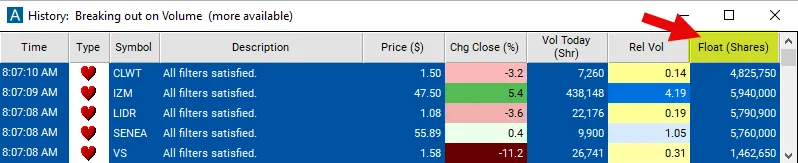
Streaming Alerts (Scanner) run in TI Pro, our desktop app for Windows (on a Mac, through Parallels). Top Lists also run in the Web Dashboard, right in your browser. Read the float rotation guide, check heavily shorted names on high short float stocks, or widen out to the small cap stock scanner.
It finds stocks with a small number of shares available to trade that are moving on heavy volume right now.
With fewer shares out there, a burst of buying can push price a long way. The same is true on the way down.
The scan shows the move, the volume, and how much of the float has already changed hands today.
Streaming Alerts run in TI Pro, our desktop app for Windows (on a Mac, through Parallels). Top Lists (Screeners) also run in the Web Dashboard, right in your browser.
Momentum. Traders look for low float names making new highs on heavy volume.
Float rotation. When a stock trades its whole float early, it has a lot of attention.
Short interest. Some check the short float too, since a heavily shorted low float stock can move hard.
Low float stocks move fast both ways. A stock up 40% can give most of it back in minutes.
Halts are common. You can be stuck in a position while trading is stopped.
Spreads widen in fast moves. Size small and know your exit before you get in.
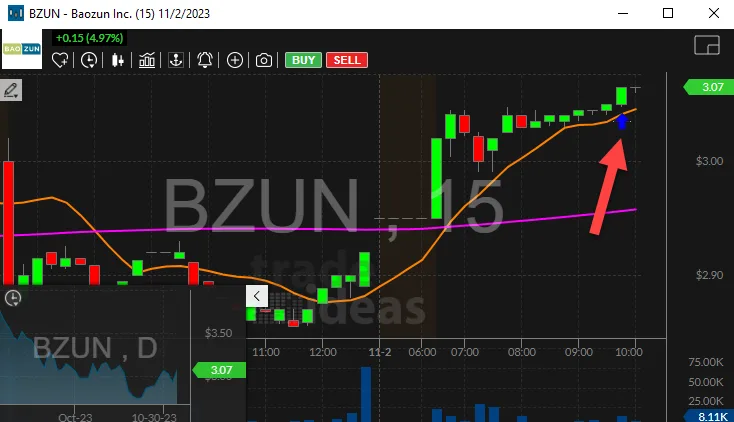
A low-priced stock climbing on steady volume, with the New High alert marking the push. Add a Float maximum to the same alert and you only hear about the small-float names.
Float is not fixed. An offering adds shares and can turn a low float stock into a normal one. Check recent filings.
Free account, just an email. No card. Live access for a limited time.
It is any Trade Ideas alert window or Top List (Screener) with a maximum on the Float filter. You see the small-float stocks that are moving and how much of their float has traded.
Stocks with few shares available to trade, often under 10 or 20 million. With fewer shares to go around, heavy buying or selling can move the price fast, both ways.
That cuts both ways. A low float stock can drop as fast as it ran, and many of them get halted on big swings. Size your trades with that in mind. Set the maximum that fits how you trade; there is no single right number.
Put a maximum on Float and a minimum on Relative Volume. Add Float Turnover to see how many times the float has traded today.
A Float Turnover of 1 means a full float’s worth of shares has traded today. When that happens early in the day, the stock is getting a lot of attention. Read more in the float rotation guide.
No, but they overlap. Short Float shows the shares sold short as a percent of the float. See high short float stocks.
Short sellers can add fuel when a heavily shorted, low float stock starts to run, because some of them have to buy back. It doesn’t happen every time, and it can reverse fast.
Most traders use under 20 million shares. Some use 10 million or less. There is no official cutoff.
You can try Trade Ideas with a free account, just an email, no card. Live access is for a limited time.
Sort a Top List by Relative Volume with a Float maximum. Top Lists update every 15 seconds, so the list changes as the day goes.
Add Short Float with a minimum, like 20, next to a Float maximum. Those names can move hard when shorts buy back, and they can reverse just as fast.
Because they move fast. A quick run outside the allowed price band triggers a volatility pause. Keep the Halt alert in the same window so you see it as it happens.
Past results, including backtests, don't guarantee future results.
Free account, just an email. No card. Live access for a limited time. Ready to buy? See plans & pricing