
The AI Energy Crisis Just Got a Government Mandate — Here’s How to Trade It
The AI Energy Crisis Just Got a Government Mandate — Here’s How to Trade It
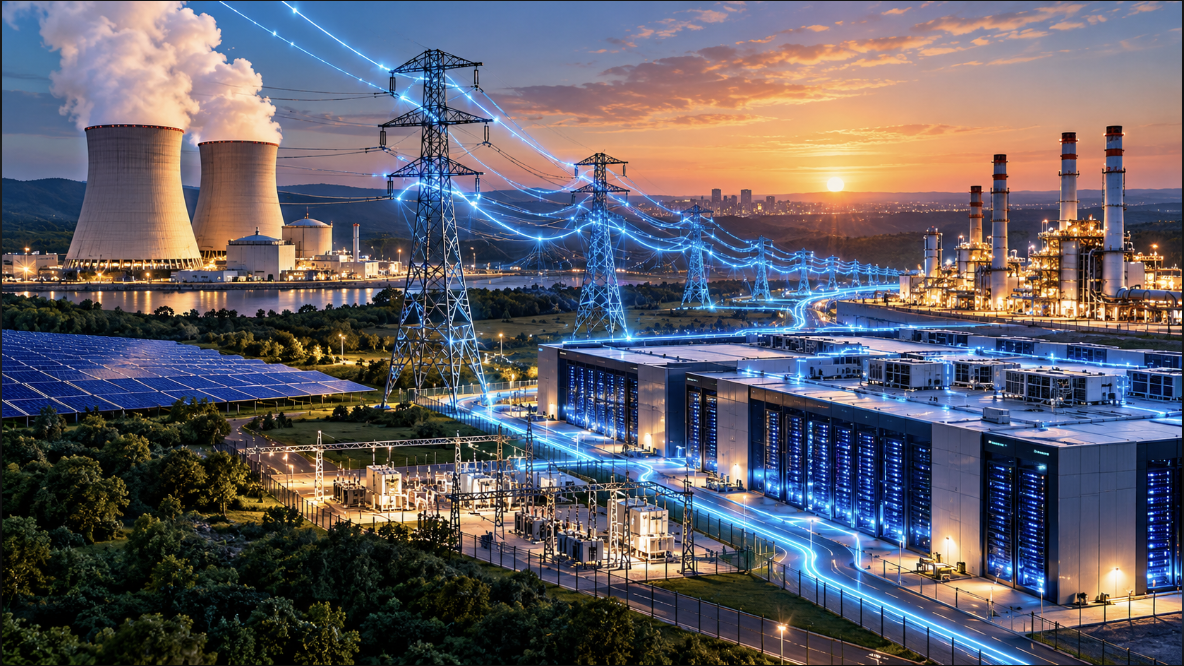
In a move that received far less attention than it deserved, the Trump administration signaled that companies — particularly those driving the AI infrastructure boom — can no longer rely on the existing electrical grid to power their operations. They need to find and build their own power generation sources. This is not a minor regulatory adjustment. This is the federal government acknowledging that the existing grid cannot meet the demands of the AI era and effectively telling the world’s largest companies to solve the energy problem themselves. When the government tells Microsoft, Google, Amazon, and Meta to build their own power plants, it doesn’t create a problem for the market — it creates one of the most significant investment themes of the decade. The smart money is already moving. Here is where it is going.
Why This Happened — The AI Power Crisis in Plain English
AI data centers consume extraordinary amounts of electricity. A single large language model training run can consume as much power as thousands of homes use in an entire year — and that was before the current generation of models, which are significantly larger and more computationally demanding. Microsoft, Google, Amazon, and Meta are each committing between $50 and $100 billion to data center infrastructure in 2025 and 2026 alone — and every one of those facilities needs a massive, reliable, dedicated power supply before a single server can go online. The US electrical grid was never built for this. Designed for residential neighborhoods, office buildings, and traditional manufacturing, it now faces industrial-scale computing loads that didn’t exist five years ago. Utilities are struggling to connect new data centers fast enough — permitting delays, transmission constraints, and infrastructure backlogs mean companies are waiting years for power they need right now. The Trump administration’s response: stop waiting for the grid to catch up. Find your own power. Generate it yourself.
What “Build Your Own Power” Actually Means
This isn’t theoretical — the biggest companies in the world are already doing it, and the Trump directive accelerates the trend dramatically. Microsoft’s landmark deal with Constellation Energy to restart Three Mile Island is the most visible example — a 20-year power purchase agreement specifically to generate electricity for AI data centers. Google has signed agreements for small modular reactor capacity that won’t even be built until the late 2020s, so desperate for clean baseload power that they are contracting for generation that doesn’t physically exist yet. Companies are building dedicated natural gas power plants directly adjacent to their data centers, bypassing the grid entirely for immediate power needs. Hyperscalers are contracting dedicated solar and wind farms that feed power directly to specific campuses. Small modular reactors — smaller, faster to build, and deployable closer to where power is needed — are receiving unprecedented investment interest from the tech giants who need exactly what SMRs can provide. Companies that can generate power reliably and at scale will have a fundamental competitive advantage over those still waiting in line for grid connections. The Trump directive just made that race official.
The Sectors and Stocks That Win
Nuclear — The Biggest Direct Beneficiary: Nuclear is uniquely positioned because it provides exactly what AI data centers need — reliable, carbon-free, baseload power that runs 24 hours a day regardless of weather. Constellation Energy (CEG), already signed to the landmark Microsoft deal, sits directly in the crosshairs of every company now searching for dedicated nuclear power. Vistra Corp (VST) has become institutional investors’ favorite AI power play with its nuclear and natural gas generation portfolio. And uranium miners like Cameco (CCJ) benefit from every new nuclear commitment — more reactors means more fuel demand for decades.
Natural Gas — The Immediate Solution: While nuclear and renewables are being built, natural gas is the bridge fuel that can be deployed fastest for on-site generation. EQT, Coterra, and other natural gas producers benefit from increased industrial demand, while natural gas turbine manufacturers see direct demand from companies building dedicated generation facilities.
Grid Infrastructure — The Picks and Shovels: Even companies building their own power still need transmission equipment, switchgear, transformers, and power management systems. Eaton Corporation (ETN) supplies the electrical equipment every data center power installation requires. Vertiv Holdings (VRT) provides thermal management and power infrastructure specifically designed for data centers. Quanta Services (PWR), the largest electrical grid contractor in the US, builds the dedicated transmission infrastructure connecting self-generated power to data center facilities.
Renewable Energy Developers: NextEra Energy (NEE), the world’s largest renewable energy producer, is well positioned to build and operate dedicated solar and wind facilities for corporate power buyers. Independent power producers with renewable development pipelines see dramatically increased demand from companies now effectively mandated to source their own power.
The Policy Tailwind — Why This Matters Beyond the Headlines
Government signals shape regulatory and investment environments for years—and the Trump directive sends several powerful signals at once. It implies a willingness to expedite the permitting processes that have historically slowed energy project development, meaning faster construction and faster revenue for energy companies. It creates political momentum for major grid infrastructure investment—a multi-year tailwind for grid equipment manufacturers and contractors. It removes one of the most significant political headwinds nuclear energy has faced for decades by actively encouraging nuclear development from a Republican administration. It also gives companies explicit government encouragement to deploy capital into their own power generation at a pace that would have seemed impossible before the directive. Government policy rarely creates investment opportunities this clearly defined. This directive tells you exactly where corporate capital is going to flow for the next decade — and the stocks positioned to capture that flow are identifiable right now.
How to Position Around This Theme
Short-term, use Trade Ideas scanners to track unusual volume and momentum in nuclear, natural gas, and grid infrastructure names. CEG, VST, ETN, VRT, and PWR have all shown they move significantly on AI energy headlines — and the headlines will keep coming as companies announce new power deals in response to the directive. Set alerts around hyperscaler earnings calls: when Microsoft, Google, Amazon, and Meta discuss power infrastructure on their quarterly calls, the energy stocks move the same day. Watch for power purchase agreement announcements — these are binary catalyst events that gap specific stocks significantly and often arrive with little warning.
Long term, the rate base expansion story compounds over years — utilities that win large corporate power contracts today are building earnings growth that pays out over a decade. Every new nuclear commitment creates decades of uranium demand, meaning Cameco and other uranium producers benefit from decisions being made today for plants that won’t run for years. And companies investing in small modular reactor development now are positioning for a technology that could reshape power generation in the 2030s — early positioning in the right names could produce extraordinary returns as the technology matures.
The Bottom Line
This isn’t a speculative theme; it is already happening. Microsoft restarted Three Mile Island. Google is contracting SMR capacity years in advance. Amazon is building dedicated generation for its data centers. The Trump directive doesn’t create this trend — it accelerates it, legitimizes it, and removes the regulatory friction that was slowing it down. Traders and investors who position in the energy infrastructure companies enabling this transition before it becomes the consensus trade will look back on 2026 as the year the AI energy opportunity was hiding in plain sight. Log into Trade Ideas today, build a scanner around nuclear, natural gas, and grid infrastructure names, set alerts around corporate power announcement catalysts, and start tracking one of the market’s most clearly defined multi-year investment themes. At the end of the day, when the government tells Big Tech to generate its own electricity, the companies that make that possible become some of the market’s most important stocks.