
The AI Energy Crisis: Why Data Centers Are Creating the Biggest Utility Stock Opportunity in Decades
The AI Energy Crisis: Why Data Centers Are Creating the Biggest Utility Stock Opportunity in Decades
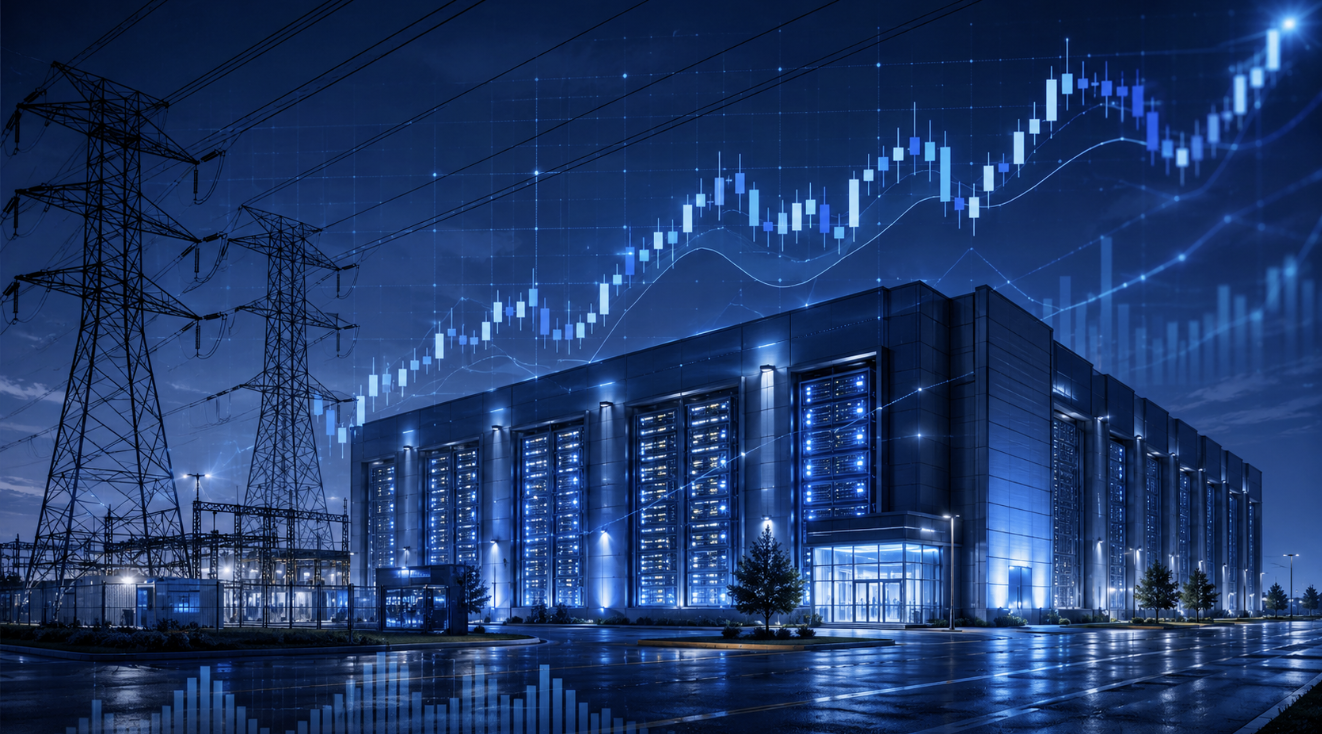
Everyone is talking about AI — the chips, the models, the software, the robots. But almost nobody is talking about the single most critical resource that makes it all possible. Not semiconductors. Not cloud infrastructure. Electricity: massive, unprecedented amounts of electricity. The data centers powering every AI model you’ve ever heard of consume more power than most mid-sized American cities — and demand is accelerating faster than the grid can handle. While retail traders chase Nvidia and debate which AI software company wins the next generation of contracts, the quietest and most durable opportunity of the entire AI era is sitting in utility stocks — a sector most traders haven’t seriously looked at since their grandparents bought dividend stocks. AI doesn’t run on code alone; it runs on power, and the companies that provide it are quietly becoming some of the most strategically important stocks in the market. This is the trade hiding in plain sight, and most traders haven’t found it yet.
The Scale of the Problem
A single ChatGPT query uses roughly ten times the electricity of a standard Google search — multiply that by hundreds of millions of daily queries across every AI platform simultaneously and the math becomes staggering. Training GPT-4 consumed an estimated 50 gigawatt-hours of electricity — enough to power thousands of homes for an entire year, on a single training run. Microsoft, Google, Amazon, and Meta are each committing between $50 and $100 billion on data center infrastructure in 2025 and 2026 alone — and every facility requires dedicated utility-scale power before a single server goes online. The US electrical grid was never built for this. Designed decades ago for residential and commercial demand, it is now being asked to support industrial-scale computing loads that didn’t exist five years ago. Power demand from data centers is projected to double or triple by 2030 — and the grid simply cannot keep up. This isn’t a future problem; it’s happening right now.
Why This Creates a Generational Opportunity in Utility Stocks
For most of modern financial history, utility stocks have been the definition of boring — steady dividends, regulated returns, slow growth, the kind of thing retirees buy and forget about. That dynamic is changing permanently. For the first time in a generation, utilities are experiencing demand growth that justifies massive capital investment. But here’s the mechanic that makes it compelling: regulated utilities earn a legally approved return on every dollar of infrastructure they build.
AI-driven demand is handing them the largest rate base expansion opportunity in decades, and every dollar spent serving data centers generates regulated returns for years. Hyperscalers are signing decade-long power purchase agreements that lock in cash flow certainty Wall Street is only beginning to price in.
AI companies are so desperate for reliable clean power that they are funding the restart of nuclear plants previously scheduled for permanent decommissioning — something that would have seemed impossible five years ago. Solar and wind farms are being contracted at record rates specifically to serve data center demand, creating a construction boom that ripples through utilities, equipment manufacturers, and grid operators simultaneously. The boring sector just became one of the most strategically important in the market.
The Stocks to Watch

The opportunity spans an entire ecosystem. Among traditional utilities, Constellation Energy (CEG) is the clearest single-stock expression of the nuclear renaissance — it signed a landmark 20-year power purchase agreement with Microsoft to restart Three Mile Island specifically for AI data centers.
NextEra Energy (NEE) is the largest renewable energy producer in the world, directly positioned to supply the clean power hyperscalers are contractually committed to using.
Vistra Corp (VST) has become a favorite institutional play on AI power demand with nuclear and natural gas exposure. In grid infrastructure, Vertiv Holdings (VRT) provides thermal management and power systems specifically designed for data centers — one of the purest plays available.
Eaton Corporation (ETN) manufactures the switchgear, transformers, and power distribution equipment every data center requires.
Quanta Services (PWR) builds the transmission lines and grid upgrades that AI power demand is forcing utilities to accelerate.
For higher-risk exposure, uranium names like Cameco (CCJ) and small modular reactor developers are receiving unprecedented institutional interest as the nuclear renaissance accelerates.
Use Trade Ideas scanners to track momentum and accumulation in these names.
The Hyperscaler Connection
The hyperscalers aren’t passive participants — they are actively reshaping the entire energy landscape. Microsoft’s deal with Constellation to restart Three Mile Island validated the entire nuclear renaissance trade in a single announcement — a 20-year nuclear power purchase agreement signed by the most valuable software company in the world. Google signed agreements for small modular reactor capacity that won’t be built until the late 2020s — so desperate for clean baseload power they contracted for generation that doesn’t physically exist yet.
Amazon has committed over $100 billion to data center infrastructure, each facility requiring dedicated utility-scale power before a single server goes live. When the largest, most analytically sophisticated companies in the world are signing 20-year power contracts and pre-committing to unbuilt nuclear capacity, they are telling you exactly where demand is going. Utility stocks are the most direct and liquid way to own that demand. The hyperscalers have already placed their bets. The utility stocks haven’t fully priced it in yet.
The Risks
No opportunity this compelling comes without risks worth understanding. Regulatory risk is the most structural: rate cases can be delayed, reduced, or denied by state public utility commissions regardless of how compelling the demand story is. Construction timelines matter equally; new power generation takes years to permit and build, creating execution risk for utilities that have made commitments they cannot immediately fulfill. Interest rate sensitivity hits regardless of business performance — utility stocks compress when rates rise, and an unexpected hawkish Fed pivot pressures the entire sector even when the AI demand story remains intact. If AI efficiency improves dramatically and models require significantly less compute per query, the power demand growth curve could flatten faster than projections suggest. The thesis is strong. The risks are real, so size accordingly.
How to Trade It
Short term:
Use Trade Ideas scanners to track momentum and unusual volume in CEG, VST, NEE, and VRT — these names move significantly on AI power demand headlines and hyperscaler earnings commentary.
Set alerts around Microsoft, Google, and Amazon quarterly calls — when data center spending is discussed, utility stocks often move the same day.
Watch for power purchase agreement announcements, which are binary catalyst events that can gap stocks significantly.
Long term:
The rate base expansion story compounds over years
Utilities winning large data center customers today are building earnings growth that pays out over a decade.
The dividend growth angle is equally compelling: utilities expanding their rate base have justification to grow dividends at rates the sector hasn’t seen in decades, combining income and growth in a way that historically attracts significant institutional capital.
The Bottom Line
The AI revolution is real — but the market has been almost entirely focused on the software and chip layer while ignoring the physical infrastructure that makes it possible. Power is not optional for AI.
It is the foundational requirement — and the companies that provide it are entering a demand environment unlike anything the utility sector has experienced in living memory. The traders who recognize this now, before utility stocks become the consensus AI trade, are the ones who will look back on this as one of the most obvious setups they ever acted on.
Log into Trade Ideas today, build a scanner around utility and power infrastructure names, set your alerts around hyperscaler earnings calls and power purchase agreement announcements, and start tracking the trade hiding in plain sight behind the AI revolution — before the crowd figures out that you can’t run AI without electricity.