
Buy the Rumor, Sell the News: The Market Phenomenon Every Trader Needs to Understand
Buy the Rumor, Sell the News: The Market Phenomenon Every Trader Needs to Understand
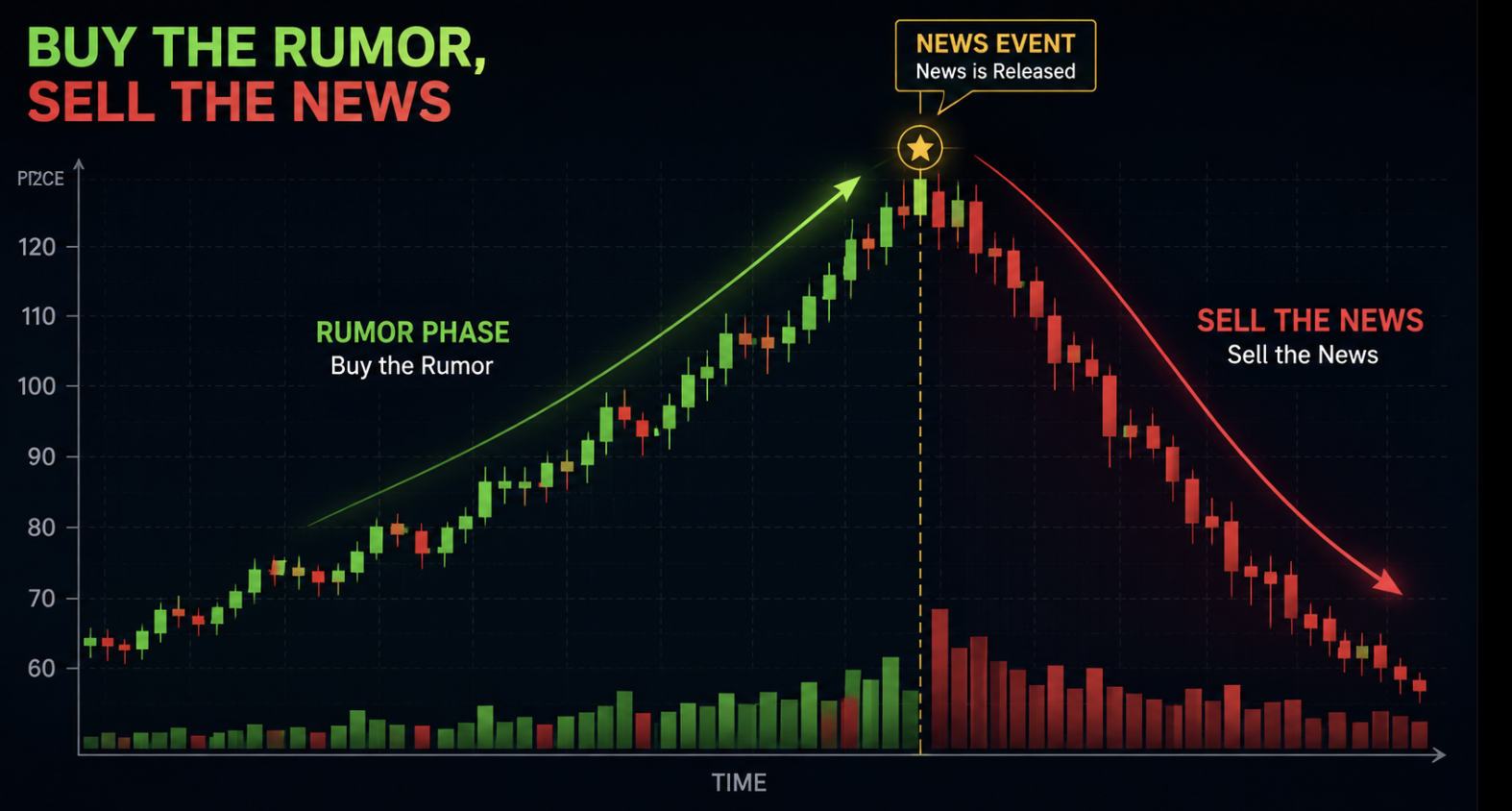
A company reports blowout earnings. Revenue beat, profit beat, guidance raised — the news is undeniably great by every measure. And the stock drops 8% by noon. Sound familiar? Or a major product launch hits, the CEO is on every financial channel, the headlines are euphoric — and the stock sells off hard within hours. New traders see this and think the market is broken. Experienced traders see it and think opportunity. This phenomenon has a name that’s been around as long as Wall Street itself: buy the rumor, sell the news. It’s one of the oldest and most reliable patterns in financial markets — and understanding why it happens will permanently change how you approach every catalyst event on your calendar. This isn’t a glitch. It’s human psychology playing out at scale. And once you see it, you can’t unsee it.
What It Actually Means
In the weeks or months before a major anticipated event — earnings, a product launch, an FDA approval, a Fed decision — a stock gradually drifts higher as anticipation builds. Traders and institutions position in advance, buying the expectation of good news rather than the news itself. Then the event arrives. The news is good — sometimes even great. And the stock sells off. To new traders, this feels completely wrong. But here’s the key insight: by the time the news is public, it is already priced in. The move already happened during the drift up. Markets are a discounting mechanism — they price what participants believe will happen in the future, not what is happening right now. When that future arrives and gets confirmed, the reason to hold disappears. And so does the price.
Why It Happens
It starts with anticipation. In the weeks before a major catalyst, optimism builds gradually — analysts upgrade the stock, media coverage increases, retail interest grows. By the time the announcement arrives, the stock has already priced in a positive outcome. The moment the news is confirmed, the traders who bought the rumor have what they were waiting for — their thesis played out, and their reason to hold is gone. They sell.
Large institutional funds use the high-volume news event as a liquidity opportunity, finally able to exit large positions without moving the market against themselves. And here’s the part that stings: retail traders who weren’t positioned during the drift up see the headline, get excited, and buy at exactly the moment institutions are selling — providing the exit liquidity that funds the selloff. Even genuinely good news can disappoint if it doesn’t exceed what the market already priced in. This isn’t about good news versus bad news. It’s about expectations versus reality.
Real Examples That Make It Click
- Earnings season: a stock beats estimates by 15%, raises guidance, and drops 10% — because analysts had already modeled in a 20% beat and the guidance raise was below whisper numbers.
- Product launches: Apple announces a new iPhone everyone expected — stock sells off the day of the keynote because anticipation had already driven it higher in the weeks before.
- Fed decisions: the Fed cuts rates exactly as expected — markets sell off because the cut was fully priced in and traders who bought the anticipation have no reason to hold.
- FDA approvals: a biotech runs 40% in the month before an expected drug approval, gets it, and immediately gives back 20% as event traders exit. The common thread? The price move happened before the news. The news was the exit, not the entry.
How to Identify the Setup
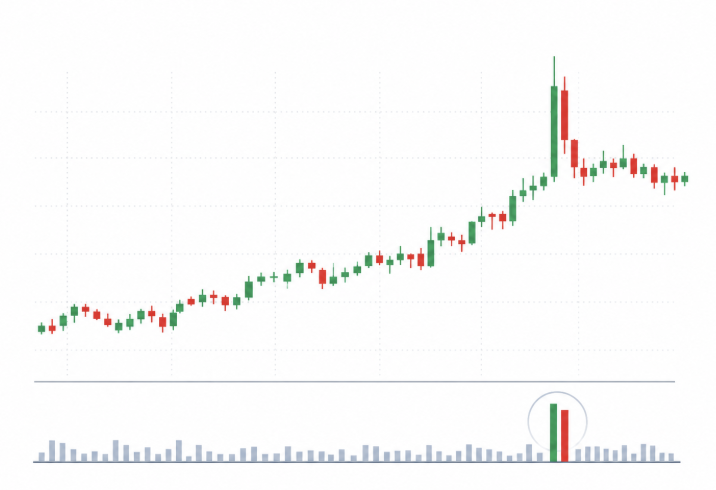
The rumor phase leaves footprints. Use Trade Ideas scanners to identify stocks showing unusual upward momentum in the days and weeks before a known catalyst date — this is the rumor phase building in real time. Volume tells the deeper story: accumulation building ahead of a catalyst without a corresponding news announcement is one of the clearest signals that informed money is quietly positioning. The options market adds another layer — unusual call option activity before an earnings report is one of the most reliable early signals the rumor phase is active. Know every upcoming catalyst for every stock on your watchlist, and start watching price action weeks in advance. Set Trade Ideas alerts for unusual pre-event volume and momentum shifts. The drift up almost always starts quietly, long before it becomes obvious to everyone else.
How to Trade It
Trading the Rumor Phase: Enter during the accumulation phase — before the news, when the drift is early, and the position still has room to run. Identify the catalyst date and work backward: how much runway remains, and how much has the stock already moved in anticipation? Set a clear exit plan before the event — decide in advance whether you will hold through the announcement or exit before it. Having that plan locked in before the emotion of the event is the difference between a strategy and a reaction. Use Trade Ideas to scan for unusual volume plus upward drift plus an upcoming catalyst — that combination is the setup.
Trading the News Selloff: For experienced traders, the selloff after a good news announcement can be a short opportunity — but timing is critical, and risk management is non-negotiable. Watch for the gap up followed by immediate selling — the classic gap and crap pattern that signals sell-the-news is fully in play. The fade trade involves entering short as initial euphoria gives way to institutional selling, with a clear stop above the gap high. For more patient traders, the post-selloff bounce often offers a cleaner long entry after the initial flush.
What NOT to Do: Don’t buy the news headline — by the time it’s on financial television, it’s almost certainly already priced in. Don’t hold through a catalyst without a plan — knowing whether you’re a rumor trader or a news trader before the event is the difference between a strategy and a gamble. And never chase the gap up — it’s one of the most reliably expensive mistakes in trading.
The Exceptions
Not every positive news event sells off. The genuine surprise is the clearest exception — an unexpected merger, a blowout beat that far exceeds whisper numbers, a regulatory approval the market assigned low probability. These produce genuine breakouts because there was no rumor phase to unwind. If a stock hasn’t drifted up significantly before the announcement, there’s no built-up positioning to exit and the news can drive a fresh move. In a strong sector trend, individual stock news can add fuel to an already-moving fire. The simplest tell: watch the pre-event price action. Barely moved before the announcement? The news has real potential. Already up 20-30% in anticipation? Sell-the-news risk is elevated.
The Bottom Line
Buy the rumor, sell the news isn’t a flaw in the market — it’s the market working exactly as it should. Understanding this pattern protects you from being the retail trader who buys the headline at the top and gives you a repeatable framework for every catalyst event on your calendar. The traders who profit most consistently are the ones who position during the accumulation phase, define their exit before the announcement, and never chase the gap. Log into Trade Ideas today, scan for stocks showing pre-event accumulation, set your alerts for unusual volume in the days before major announcements, and start positioning on the rumor — not the news.
There’s a critical difference between a normal losing streak and one that starts spiraling into something more damaging. Watch for these warning signs:
⚠️ Revenge trading: Taking trades just to recover recent losses instead of waiting for a setup that actually meets your criteria.
📈 Position sizing creep: Sizing up beyond your normal rules to make back losses faster, which dramatically increases risk at the worst possible time.
🔄 Strategy abandonment: Throwing out a proven process after a few losses and chasing whatever seems to be working right now.