
Is Silver a Good Investment in 2026? Market Trends and Forecast
Is Silver a Good Investment in 2026? Market Trends and Forecast
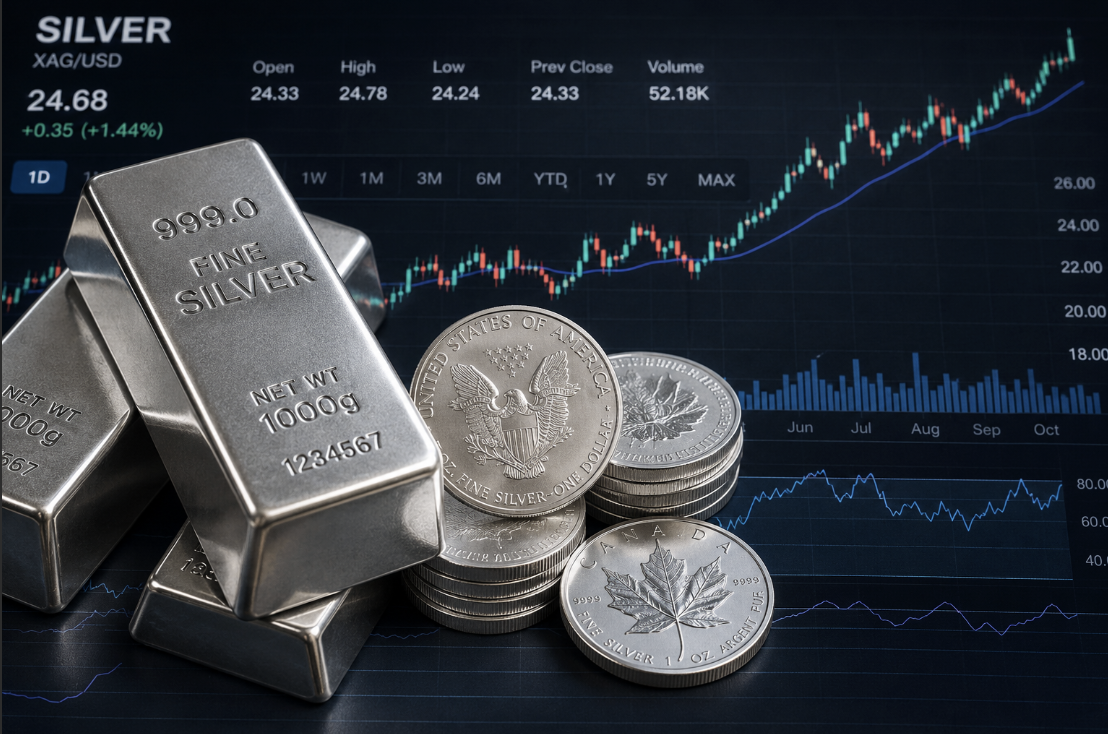
As we move into 2026, the silver market continues to attract interest from both investors and industrial users.
In recent years, silver demand has been increasingly influenced by global technological and energy transitions. Expanding solar energy installations, rapid electric vehicle adoption, and growing electronics manufacturing are driving industrial consumption of silver. At the same time, macroeconomic factors such as inflation concerns, currency movements, and interest rate policies continue to influence investor demand for precious metals.
Silver as a Hedge Against Inflation: Its Role in Economic Uncertainty
Silver is commonly regarded as a reliable store of value during inflationary periods, similar to gold. As fiat currencies lose purchasing power, precious metals like silver typically hold or increase their value, thanks to their intrinsic worth. In addition, there’s also inflation concerns, investors often turn to precious metals during periods of financial uncertainty, geopolitical tension, or currency volatility. Because silver is both an investment asset and an industrial metal, its price can react to a combination of economic factors and industrial demand cycles. Here’s why:
- Real-World Example: During times of significant inflation (like in the 1970s or 2008), silver’s price surged as investors sought refuge in precious metals. Silver can act as a counterbalance to the loss in value of fiat currencies, especially in economies with high debt levels.
- Inflation Protection Strategy: When inflation accelerates, the cost of living rises. This pushes the price of commodities like silver higher, making it a go-to asset for those seeking protection against eroding purchasing power. Investors can consider silver in physical forms (coins, bars) or through futures contracts as a hedge.
- Correlation with Other Commodities: Unlike stocks, silver has a low correlation with traditional assets. If the stock market is underperforming during periods of inflation, silver tends to go up, making it a great diversification tool.
- Silver vs. Gold in Inflation Protection: Gold is typically seen as the superior inflation hedge, but silver offers a better risk-reward proposition for those looking for potential high returns. Silver often outperforms gold during inflationary periods and when economic recovery is underway, especially because its lower market price makes it more accessible for smaller investors.
Investors also monitor the gold–silver ratio, which compares the price of gold to silver. When the ratio is unusually high, silver is sometimes viewed as undervalued relative to gold. Historically, silver has occasionally outperformed gold during economic recovery periods due to rising industrial demand.
Technological Demand Driving Silver Prices Up
Beyond renewable energy and electric vehicles, emerging technologies are also contributing to growing silver demand. Rapid expansion in artificial intelligence infrastructure, semiconductor manufacturing, and large-scale data centers requires highly conductive materials for electronic components. Silver’s superior conductivity makes it an important material in many advanced electronic systems.
Solar Energy Demand
The role of silver in solar energy is pivotal due to its outstanding electrical conductivity, essential for photovoltaic (PV) cells in solar panels. The solar energy industry has become one of the fastest-growing sources of silver demand. Photovoltaic (PV) solar panels rely on silver for their electrical conductivity, making the metal essential for renewable energy infrastructure.
Each solar panel typically contains 20 grams (0.643 ounces) of silver. As new technologies like Heterojunction (HJT) cells emerge, which use up to 22 milligrams of silver per watt, the silver required per panel is likely to rise. Additionally, global investment in solar PV manufacturing reached $80 billion in 2023, or 40% of total clean-tech investment, a trend likely to continue as governments push for carbon neutrality and more renewable energy adoption.
Electronics and Electrical Systems
Silver’s high conductivity also makes it indispensable in the electronics sector, where it is used in:
- Smartphones
- Electric vehicles (EVs)
- Batteries
- Semiconductors
- Circuit boards

The demand for silver in electronics is projected to grow alongside the increasing adoption of EVs and other digital technologies. In 2023, industrial demand for silver reached a record 654.4 million ounces, with further growth expected due to electrification and the rise of green technologies. This growth is expected to continue as electrification and the adoption of green technologies accelerate.
Specifically, the electric vehicle market is a key driver of this demand. In 2023, EV sales in the US exceeded 1 million units, marking a 52% increase from the previous year. By 2035, it is anticipated that half of all vehicles sold globally will be electric, boosting silver consumption in automotive components and charging infrastructure.
Medical Applications
In healthcare, silver is prized for its antibacterial properties, which are utilized in products like wound dressings, catheters, and medical implants. Silver’s antibacterial properties make it valuable in healthcare applications. It is commonly used in wound dressings, medical coatings, and antimicrobial products designed to reduce infection risk.
Advanced silver wound dressings, which make up 60.3% of the market share in 2024, are becoming more popular due to their ability to reduce infections and speed up healing. The increasing number of chronic wounds, especially from aging populations and conditions like diabetes, is driving this demand. As healthcare continues to expand, the need for silver in medical applications, particularly in wound care, is set to increase.
Global Silver Supply Trends and Market Deficits
While industrial demand for silver continues to grow, global supply does not always increase at the same pace. This is an important part of the silver market because prices are influenced not only by investor interest and industrial use, but also by how much silver is available from mining and recycling.
Unlike some commodities, silver supply can be relatively slow to respond to rising demand. New mining projects often take years to develop, and many silver mines face operational, regulatory, and cost-related challenges. In addition, a large portion of global silver production comes as a byproduct of mining other metals such as copper, lead, and zinc. This means silver output is not always driven by silver prices alone.
When demand outpaces newly available supply, the market can move into deficit. In a deficit environment, silver prices may face upward pressure, especially if industrial demand remains strong and investor interest also increases. For traders and investors, understanding supply trends is essential because they can have a major impact on long-term price direction and market volatility.
Market Outlook for Silver in 2026: Price Predictions and Demand Drivers
Silver in 2026 will likely be driven by two things: industrial demand and macro conditions. Strong demand from solar, EVs, electronics, and data infrastructure can support prices, while interest rates, U.S. dollar strength, and global growth can limit upside.
At the same time, interest rate policies, currency fluctuations, and global economic conditions will likely influence investment demand for precious metals.
Silver price performance in 2026 could vary depending on global economic conditions:
- Bullish scenario: Strong renewable energy expansion and industrial demand push prices higher.
- Neutral scenario: Stable industrial demand keeps prices within a moderate range.
- Bearish scenario: Strong U.S. dollar or weaker manufacturing demand limits price growth.
Trading Silver Futures: How to Profit from Silver Price Movements
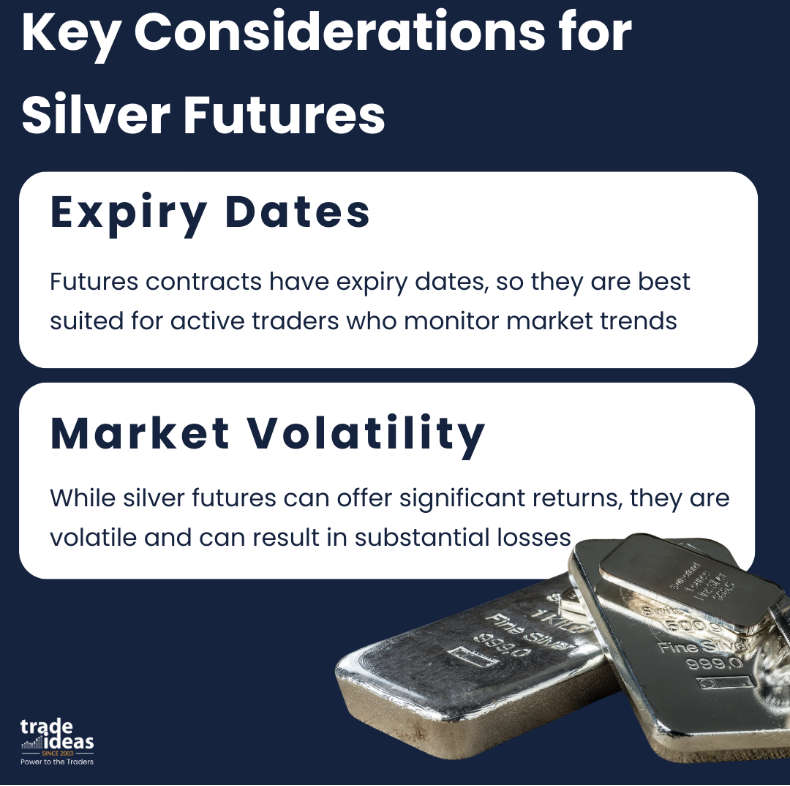
Turning from the broader market forecasts, let’s see how investors can leverage these predictions through silver futures trading. For those with a higher risk tolerance, silver futures represent an effective way to capitalize on price movements. Futures contracts are agreements to buy or sell silver at a specified price at a future date. Here’s what makes trading silver futures attractive in 2026:
- Leverage: Futures trading allows for leverage, meaning you can control a larger amount of silver with a smaller initial investment. However, while leverage increases potential returns, it also increases risk.
- Speculation on Price Movements: Silver futures allow traders to profit from both upside and downside price movements. If you anticipate a price surge in silver (due to inflation or industrial demand), you can buy contracts (going long). Conversely, if you expect a price decline, you can sell contracts (going short).
- Hedging: Futures can also be used as a hedge for silver producers or users who wish to lock in prices to protect themselves from market volatility.
Note: Because futures contracts involve leverage, traders must manage risk carefully, as price movements can amplify both gains and losses.
Silver ETFs: A More Accessible Way to Invest in Silver
Beyond the more complex futures market, Silver ETFs provide a simpler and more accessible way to invest in silver. These Exchange-Traded Funds track the price of silver, allowing investors to gain exposure to the metal without the hassle of purchasing or storing it physically. Many retail investors prefer silver ETFs because they provide exposure to silver prices without the need to store physical metal or manage futures contracts. Silver ETFs are usually the simplest option for retail investors because they give price exposure without physical storage or futures leverage.
- Popular Silver ETFs: Some of the most well-known silver ETFs include the iShares Silver Trust (SLV) and the Sprott Physical Silver Trust (PSLV). These ETFs are easy to trade on most brokerage platforms, making them accessible to both beginners and experienced traders.
- Liquidity and Low Costs: Silver ETFs offer high liquidity, and since they are traded on major exchanges, they provide flexibility for investors who want to enter and exit positions quickly. Additionally, there are typically no storage fees, as you would have with physical silver.
- Diversification: Silver ETFs are also more diversified, allowing investors to access silver’s performance through different strategies, whether through physical holdings, futures contracts, or silver stocks.
Risks of Silver Trading: What You Should Know
While silver presents a strong investment opportunity, it is not without risks. Silver is more volatile than gold because its price depends on both investor sentiment and industrial demand. That means economic slowdowns can hurt silver even when broader precious metal demand stays firm.
Here are some of the key risks to consider when trading or investing in silver:
- Market Volatility: Silver prices can be highly volatile, subject to sudden price movements based on economic news, geopolitical events, or changes in industrial demand.
- Currency Fluctuations: As silver is priced in US dollars, fluctuations in the dollar’s value can impact silver prices. A strong dollar may push silver prices down, while a weak dollar could support higher silver prices.
- Market Manipulation: Silver, like other commodities, has been subject to market manipulation, such as the London Silver Fix scandal in the past. Traders should be aware of the potential for price manipulation in the silver markets.
- Interest Rates: Rising interest rates could dampen investor appetite for silver, as it offers no yield or dividend, unlike stocks or bonds.
- Industrial Demand Sensitivity: Because a significant portion of silver demand comes from industrial applications, economic slowdowns or reduced manufacturing activity can affect prices. Weak demand from sectors such as electronics, solar manufacturing, or automotive production may reduce silver consumption.
How to Position Yourself for Success in the Silver Market in 2026
As we approach 2026, the silver market is poised for growth, with multiple drivers pushing demand higher. Whether you’re interested in physical silver, silver futures, silver ETFs, or silver mining stocks, there are various ways to profit from the potential rise in silver prices.
Key factors that could make silver a lucrative investment in 2026 include:
- Rising industrial demand, especially in solar energy and electronics.
- Inflation concerns and the potential for economic uncertainty.
- Silver’s role in renewable energy technologies.
- Investors should also watch interest rates and the U.S. dollar.
Investors interested in the silver market often monitor several indicators, including industrial demand trends, renewable energy expansion, currency movements, and interest rate policies. Tracking these factors can help traders better understand potential price movements and market sentiment.
Frequently Asked Questions on Silver Trading
1. What is silver trading for?
Silver prices fluctuate based on global market trends, supply and demand, and economic conditions. To get the most accurate, real-time price of silver, it’s essential to check platforms like Investing.com, Yahoo Finance, or TradingView.
2. How to start trading silver?
To start trading silver, follow these steps:
- Step 1: Choose a reputable brokerage platform that offers silver trading, whether in the form of futures contracts, ETFs, or CFDs (contracts for difference).
- Step 2: Decide on the trading method – whether you want to trade physical silver, silver futures, or silver-related assets like ETFs.
- Step 3: Fund your account and start analyzing the market to identify opportunities.
- Step 4: Start trading with small positions to gain experience and understand how the silver market behaves.
3. Is silver trading profitable?
Silver trading can be profitable due to its price fluctuations, which create opportunities for substantial returns. Traders can buy or sell silver directly or trade through contracts for difference (CFDs), speculating on price movements without owning the metal. However, as with any volatile market, profits are not guaranteed, and managing risk is crucial.
4. Which is better to trade, gold or silver?
Silver is more volatile than gold, offering more trading opportunities but also higher risk. Traders who prefer frequent price movements may choose silver, while those seeking stability might prefer gold. It depends on your strategy and risk tolerance.
5. Silver ETFs vs. Silver Futures: Which is better?
Silver ETFs are ideal for beginners. They offer low fees, high liquidity, and no margin trading, making them safer and easier for long-term investors. Silver Futures, on the other hand, are better for experienced traders who want to profit from short-term price changes. Futures offer leverage, which can increase both gains and losses, but they require more expertise and risk management. Choose based on your goals, experience, and risk tolerance.
6. What is silver trading?
Silver trading involves buying and selling silver as a commodity in various forms, such as physical silver, silver futures contracts, silver ETFs, or through CFDs (contracts for difference). Traders aim to profit from changes in the price of silver by speculating on market movements.
7. What factors influence silver prices the most?
Silver prices are influenced by several factors, including industrial demand, inflation expectations, interest rate policies, currency movements, and global economic conditions.