
Summer Earnings Season Preview: The Setups to Watch Heading Into Q2 Reports
Summer Earnings Season Preview: The Setups to Watch Heading Into Q2 Reports
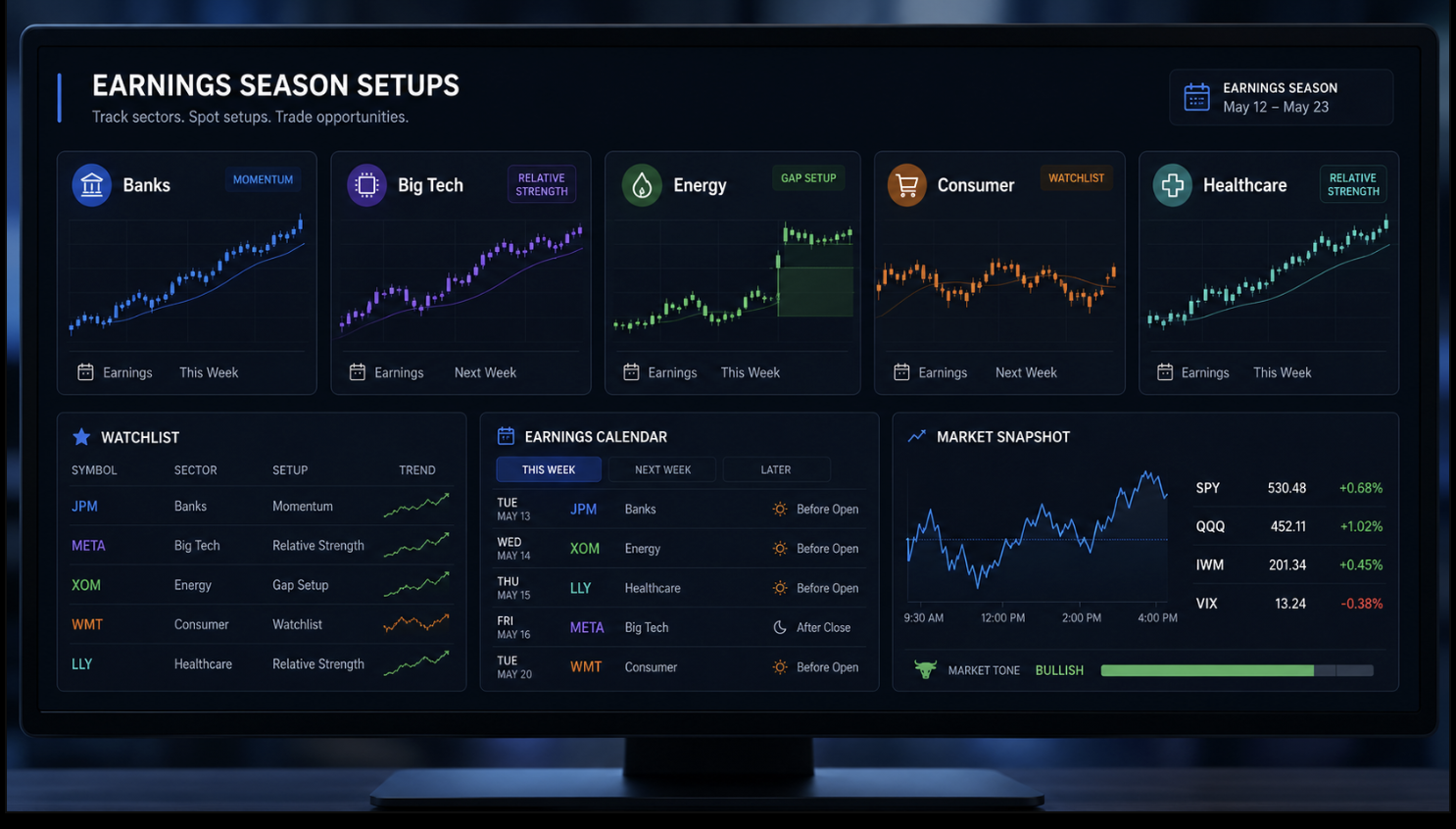
Every July, the stock market goes through one of its most powerful and most overlooked transitions of the entire year. Q2 earnings season doesn’t just deliver a scorecard on the past three months, it sets the tone for everything that follows. The sectors that lead Q3, the stocks that institutional money rotates into heading into fall, the names that get punished/rewarded; all get decided in a four-week window. Most traders make the mistake treating this period as background noise while they’re focused on their summer plans. Q2 is the first earnings season where companies have to fully account for the macro reality of 2026 — tariffs, interest rates, consumer stress, and Fed policy all show up in the numbers in ways Q1 simply didn’t demand. Add thin summer liquidity that amplifies every move, and you have a season where the opportunities are bigger, the risks are faster, and the traders who prepared in advance are the ones writing the success stories in August. Use the following to build your Q2 earnings season game plan, so you’re positioned before the market moves, not scrambling after.
Why Q2 Earnings Season Hits Different
Before we get into the game plan, it’s worth understanding why the July earnings season deserves extra attention this year. Q2 is the first earnings season in which companies have to fully account for the macro environment of 2026 — tariffs, elevated interest rates, shifting consumer spending, and Fed policy all show up in Q2 numbers in ways they didn’t in Q1. The first quarter gave companies cover. Q2 does not. And the backdrop makes every report more meaningful than usual. Then there is the summer liquidity factor: thin trading volume in July amplifies every move. A stock that might gap 5% on an earnings beat in October can move 10-15% on that same beat in July simply because there are fewer shares trading hands and price moves faster in either direction.
For traders, that means bigger opportunities — and bigger risks if you’re caught on the wrong side unprepared. Most retail traders consistently underestimate: the guidance matters more than the number. What a CEO says about the second half of 2026 on their earnings call will set up the next two quarters of trading in their sector. This is also historically when the year’s biggest sector rotations begin.
The Macro Backdrop Going Into Q2 Reports
To trade earnings season well, you need to recognize that performance will cluster around exposure to 2026’s unique macro pressures—not happen at random. The American consumer is stressed, and discretionary spending is softening, impacting retail, restaurant, and consumer-brand earnings. Tariff impacts are now bleeding into manufacturing, retail, and tech hardware margins; deferred costs from Q1 are becoming visible in Q2. Elevated interest rates pressure housing-related and financial names and challenge rate-sensitive growth stocks. Even the labor market, while still stable, shows early cracks in jobless claims that prudent companies must address in their outlooks. Approaching earnings season with this context is essential to distinguishing trustworthy beats, questionable misses, and the real story behind guidance revisions. Context isn’t everything in earnings season—but without it, you’re just guessing.
Sector by Sector: Where the Biggest Setups Are
Every sector tells a different story this earnings season — here’s where the biggest setups are and what to watch in each one.
Financials:
- Banks report first and set the tone for everything that follows.
- The three numbers that matter most: net interest margins, loan loss provisions, and credit card charge-off rates
- JPM, BAC, GS, and WFC will tell you more about the consumer and credit environment than any government report
- A strong bank season historically lifts the broader market; a weak one sets a cautious tone
Technology:
- Big Tech reports mid-to-late July and carries more index weight than any other sector.
- AI capex investments are finally translating into measurable revenue growth.
- Watch forward guidance from MSFT, GOOGL, META, and AMZN closely — it will set the tone for growth stocks through Q3 and Q4.
Consumer Discretionary:
- Restaurants, retailers, travel, and luxury names will reveal how consumers held up under depleted savings, rising debt, and higher prices.
- Trade-down names like WMT and COST are likely to shine; discretionary and luxury names face real downside risk.
- Watch same-store sales trends, and the language executives use about H2 — it will be just as telling as the numbers themselves.
Energy:
- Q2 captures the heart of summer driving season — energy companies should be reporting strong demand numbers.
- The bigger question is what they say about H2 as summer demand transitions and geopolitical factors shift.
- Watch refining margins and any guidance changes on capital expenditure — those signals will tell you where smart money is positioning heading into the fall.
Healthcare and Biotech:
- Healthcare tends to be a safe harbor when other sectors disappoint — a reliable place to rotate defensively if early reports disappoint.
- Biotech earnings can be binary — one drug approval or trial result can move a stock 30-50% overnight.
- Use Trade Ideas scanners to flag unusual options activity in biotech names ahead of reports — it often signals something is coming before the rest of the market knows it.
How to Set Up Trades Before the Number Drops
- The Buildup Trade: identify stocks with strong technical setups heading into earnings and position before the report — understand the risk of holding through the number
- The Options Play: for traders who don’t want to hold through binary events, options strategies allow defined risk exposure around earnings — a brief overview of the concept without getting too technical
- The Post-Earnings Drift: statistically, stocks that beat big don’t always give back the gap immediately — the post-earnings drift trade involves entering after the number is confirmed on momentum
- The Fade: when a stock gaps up on earnings but the guidance is weak, or the beat was driven by one-time items, experienced traders fade the initial move
Names and Sectors to Have on Your Radar Right Now
The single best thing you can do before earnings season kicks off is build your watchlist now—don’t wait for the first report to drop and find yourself behind the market moves. Mark these key dates: banks start reporting in the second week of July, and Big Tech follows in the final two weeks. Use this window to prepare. Actively focus on stocks with strong technicals, clear sector momentum, and histories of beating estimates (most likely to surge on strong earnings). On the bearish side, pinpoint names are at risk from consumer stress, tariff headwinds, and rising input costs—a miss here can send a stock tumbling in thin summer liquidity. Don’t sit back and react on earnings day. Use Trade Ideas’ real-time scanners now to spot volume spikes in the days leading up to reports—often, institutional positioning flashes clear signals before results hit. When you see volume surging before a scheduled report, that’s the market signaling—don’t ignore it. Get your watchlist prepared, set alerts, and be ready to act the moment opportunity presents itself.
Trade Ideas was recently recognized by FeedSpot as one of the Top 15 Trading Education Blogs on the web — a reminder that retail traders need more than access. Feedspot is an RSS Reader that lets you subscribe to blogs, news sites, and any website you want to keep up with. They need education, structure, and tools that help them understand what the market is actually doing in real time.