
How to Build a Watchlist When You Have No Time: A Scanner-First Approach
How to Build a Watchlist When You Have No Time: A Scanner-First Approach
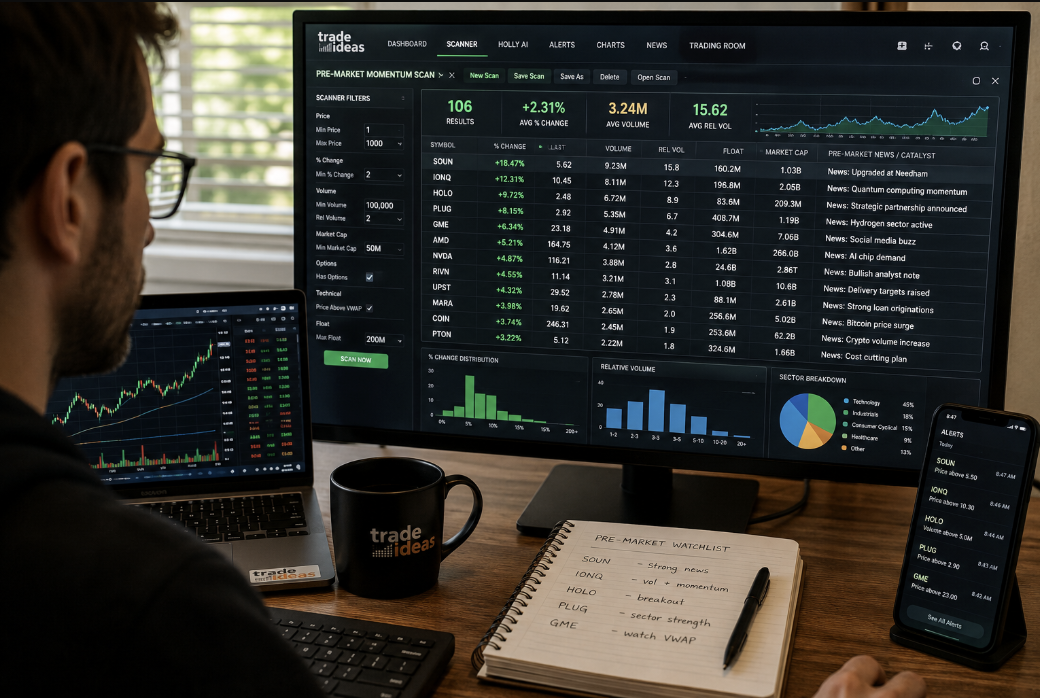
It’s 8:45 AM. The market opens in 45 minutes. You don’t know what to trade. Sound familiar? Most traders waste the most productive part of their morning manually hunting stocks, scrolling financial news, and checking social media—yet still arrive at the open unprepared and unfocused. The truth: by the time manual watchlists catch a good trade, the move is often already in progress. What if there were a faster, smarter way? Let a scanner do the heavy lifting. Walk into every open with a data-driven watchlist of top setups—built in minutes, not hours.
Why Most Traders Build Their Watchlist Wrong
Most traders build their watchlist in the same three wrong ways. They watch the same stocks every day out of habit, regardless of whether those stocks are actually moving. They build their list from news and social media, which means that by the time they find it, it’s already crowded, and the easy money is gone. Or they have no real criteria at all — the list is just a random collection of names with no defined setup and no specific reason to be there today. The result is a watchlist full of noise and zero conviction. Here’s the reframe that changes everything: a watchlist isn’t a list of stocks you like. It’s a list of stocks with a specific, data-backed reason to move today. The shift from opinion-based to data-based watchlist building is where most traders quietly level up — and it starts with understanding what a scanner actually does.
What a Trade Ideas Scanner Actually Does
So what does a scanner actually do — and why does it change everything? For newer traders, the concept is simple: a scanner is a real-time filter that sorts the entire market by criteria you define, surfacing only the stocks that meet your specific requirements at any given moment. Without one, you’re searching a haystack manually. With one, the needle comes to you. The key advantage is that scanners have no opinions, no biases, and no favorite stocks — they surface exactly what the data says is moving, breaking out, or setting up right now.
However, not all scanners are built the same, and the difference between real-time and end-of-day data is the difference between opportunity and a missed trade. By the time end-of-day scanners process their results, the move has often already happened. Trade Ideas was built specifically to solve that problem. Running in real time across the entire market, Trade Ideas flags setups the moment they develop — giving active traders the one thing manual research can never provide: speed without sacrificing accuracy.
Step 1: Define Before You Scan
Before scanning, many traders skip a crucial step—causing overwhelm when results appear. A scanner’s value depends on the filters you set: garbage in, garbage out. Consider your trading style, time frame, and ideal setup using measurable criteria. For example: stocks up 5% in 30 minutes on volume, breaking 52-week highs with volume, or showing unusual pre-market activity due to clear catalysts. More specific filters yield more valuable results. Once filters are in place in Trade Ideas, your role shifts from searching to simply evaluating the stocks that surface.
Step 2: Use Trade Ideas to Run Your Pre-Market Scan
The most valuable scanning time is the 90 minutes before the market opens. Trade Ideas quickly builds your watchlist during this window. Focus on three things:
1.) Unusual pre-market volume
2.) Gap-ups/downs with news catalysts
3.) Stocks testing key levels overnight.
Trade Ideas finds all of this automatically—no manual searching or news scrolling. Holly AI, the built-in AI, scans overnight and delivers a curated list by the time you’ve finished your coffee. Aim for 3 to 5 high-conviction names, not a long, unfocused list.
Step 3: Filter Your Scan Results Down to a Focused Watchlist
A Trade Ideas scanner will surface the opportunities — your job is to filter them down to your absolute best ideas. Every result that comes through gets run through the same three-step filter before it earns a spot on your watchlist.
1.) Does this stock have a clear catalyst today — earnings, breaking news, sector momentum, or a technical breakout that’s been building?
2.) Does the chart confirm the setup — is the technical picture clean and readable, or is it messy and ambiguous?
3.) Does it fit your trading style and risk tolerance — is the price range right, the volatility manageable, the liquidity sufficient to get in and out cleanly?
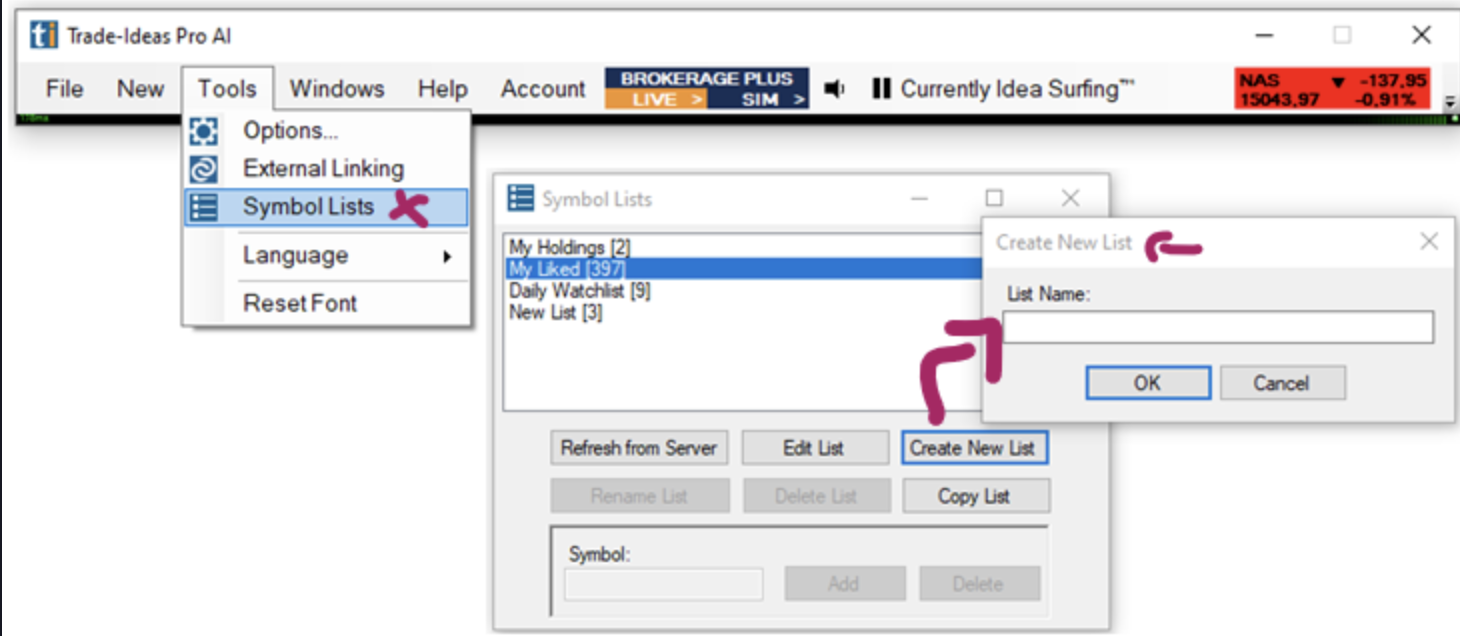
If a stock can’t pass all three, it doesn’t make the list. The magic number to aim for is 3 to 5 names on your active watchlist — enough to have options, focused enough to give each one your full attention. You can only trade one stock at a time, and attention is your most valuable resource at the open. Once you’ve dialed in your filters, save them inside Trade Ideas so you can run the exact same process every morning with a single click. Consistency in your process builds consistency in your results.
Step 4: Set Your Alerts and Let the Scanner Work During the Day
Building your watchlist is only half the job — the other half is knowing exactly when to act on it. Once your names are locked in before the open, set a price alert for each one before the bell rings. Alert when:
- The stock hits your entry trigger.
- The volume exceeds your defined threshold.
- The stock approaches a key support or resistance level you identified during your pre-market scan.
Trade Ideas’ real-time alert system handles all of this automatically — delivering a notification the moment a stock on your watchlist does something specific and meaningful. Instead of watching five screens simultaneously and trying to catch every move manually, your alerts tell you exactly when to look — freeing your attention for the one thing that actually makes you money: execution.
Why This Changes How You Trade
The result of a scanner-first approach is simple but significant. You spend less time searching, less time monitoring, and more time trading the setups that actually meet your criteria. Manual watchlist builders react to what they see. Scanner-first traders anticipate what the data is surfacing. It’s a key difference between chasing moves and being positioned before they happen. Running the same Trade Ideas scans each morning with clearly defined criteria builds pattern recognition. You start to see which setups work most consistently and which tend to fail.
This kind of systematic learning grows over time in ways that random, opinion-based watchlist building cannot. The time saved is huge: a trader using Trade Ideas can build a high-quality, data-driven watchlist in just 15 to 20 minutes before the open. Manually building a watchlist takes hours and usually yields worse results. The scanner-first approach works for any experience level—beginners get structure, experienced traders gain efficiency and consistency.
You don’t need more time to build a better watchlist. You need a better system. The scanner-first approach gives you a real-time, curated list of the best setups every morning. Traders who show up to the open with a focused, well-built watchlist consistently outperform those still figuring out what to trade when the bell rings.
Log in to Trade Ideas, build your first scanner filter, and walk into tomorrow’s open with a watchlist built by data—not gut feeling. Remember, your best trading days start before the market opens.