
What the Fed’s Next Move Means for Your Portfolio This Summer
What the Fed’s Next Move Means for Your Portfolio This Summer
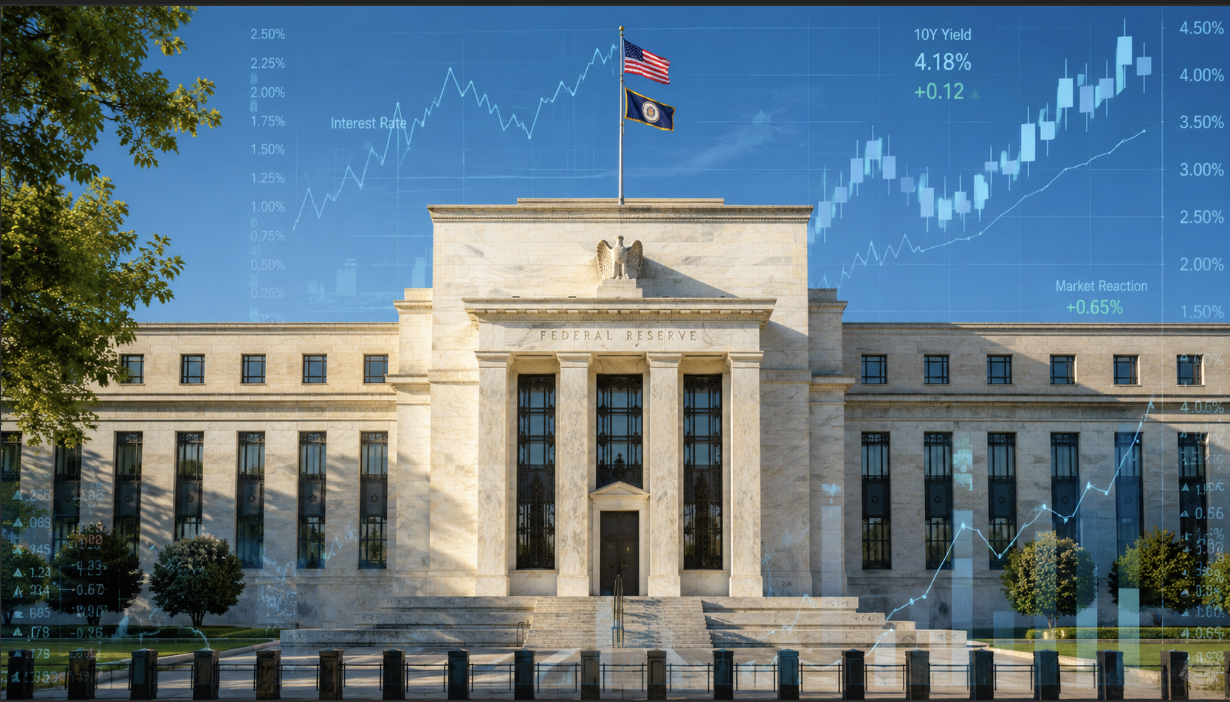
The Federal Reserve is driving markets right now, yet most retail investors don’t fully understand its impact. Every jobs report, CPI release, and off-the-cuff Fed comment is moving markets as the stakes for the next rate decision remain high. Cutting rates too soon risks resurging inflation; holding too long could break an already-stressed consumer. The Fed is managing this balance in real time, and markets are adjusting daily. This piece clears the noise. Whether the Fed holds, cuts, or surprises, here is what each scenario means for your portfolio this summer — and how to position before the decision arrives.
Where We Are Right Now — A Quick Fed Briefing
The effective federal funds rate currently sits at approximately 3.62%. This is meaningfully below the peak of the recent tightening cycle, but still elevated enough to keep pressure on rate-sensitive sectors across the board. The Fed is navigating a genuinely difficult balancing act right now. On the one hand, April CPI came in at 3.8% year-over-year, driven in part by a sharp energy price spike. Inflation remains stubbornly above the Fed’s 2% target. On the other side, cracks in the consumer are becoming harder to ignore. What makes this moment especially tricky is the nature of the inflation itself. Energy-driven price pressures don’t respond to rate hikes the way demand-driven inflation does. You can’t cool a refinery capacity problem or an OPEC production decision by making mortgages more expensive.
Prediction markets currently price a 96.9% probability that the Fed will hold rates unchanged at the June 16-17 meeting. Market-implied odds are 65.6% for zero rate cuts at all in 2026. This is a dramatic shift from where expectations were just a few months ago. Adding another layer of complexity, the June meeting will be the first under new Fed Chair Kevin Warsh. He follows Jerome Powell, whose term ends in May. This leadership transition introduces its own element of uncertainty into an already high-stakes summer for monetary policy.
Scenario A — The Fed Holds Rates
If the Fed holds, the market will quickly ask why. A patient, confident hold suggests inflation is trending lower, and the economy is stable; good news for risk assets. Growth and tech stocks favor rate stability, while sectors like real estate and utilities gain support from an end to tightening. Banks and financials, relying on active rates for margins, underperform in a stagnant environment. A summer hold is typically risk-on, allowing you to shift to defense if the tone is positive.
Scenario B — The Fed Cuts Rates
A summer rate cut would surprise markets and spark a swift rally. Typically, the first cut triggers gains in stocks and bonds and a weaker dollar, as borrowing gets easier and risk appetite increases. Sectors dependent on cheap financing—like REITs and small-caps—outperform, while consumer discretionary stocks benefit from a boost in spending confidence.
For bondholders, longer-duration holdings rally when rates drop. Still, context is crucial: a well-timed cut extends gains, but a panic cut can actually spark a sell-off. With visible consumer stress and energy-led inflation, the Fed’s reasoning will shape the effect of any move as much as the cut itself.
Scenario C — The Fed Hikes (The Surprise Scenario)
Nobody on Wall Street wants to say it out loud, but it’s not off the table. A small but growing contingent of market participants is betting on no cuts at all in 2026. If inflation reaccelerates through the summer, the conversation could quickly shift from “when do they cut” to “do they need to hike again.” A surprise hike would be the most disruptive outcome for markets by a significant margin. The initial reaction would be swift and broad.
Equities sell off hard.
Rate-sensitive sectors like tech, housing, and consumer discretionary take the biggest hits.
Growth stocks with stretched valuations get repriced almost immediately as the discount rate moves against them.
In a surprise hike, defensive sectors like energy, commodities, healthcare, and short-term bonds hold up best—they are less affected by rate spikes. Anyone with enough defensives already in place, not just those who called the hike, will manage the shock better. Preparation, not prediction, is key.
The Summer Wild Cards
Even the most carefully mapped Fed scenarios can get scrambled by what happens between meetings. This summer has no shortage of potential disruptors. Energy prices are the wildcard the Fed is watching most closely right now. If gas stays elevated through July and August, inflation will stay stickier than their models expect. The case for any cut weakens significantly. Jobs data is the mirror image. A softening labor market is the single fastest accelerant for a rate cut. Any meaningful uptick in jobless claims over the summer could shift the entire rate outlook within weeks.
Consumer spending data is the quieter signal that carries just as much weight. The Fed knows consumers are under pressure. If that pressure shows up visibly in the spending numbers, the calculus around holding rates changes fast. And then there’s geopolitical risk—the wildcard that doesn’t telegraph itself. A fresh supply shock, a Middle East escalation, or an unexpected trade policy flare-up can reprice the entire rate outlook overnight. This can render every scenario in this playbook secondary to the headline. The bottom line: stay data-aware this summer, because the Fed is.
How to Position Your Portfolio for Any Outcome
The best portfolio for this summer isn’t built around one Fed outcome; it’s built to survive all three. The barbell strategy is the cleanest framework: pair growth exposure with defensive hedges so that, whatever the Fed does, you’re never caught off guard. Look for names that benefit from the inflationary environment or generate consistent income to cushion volatility. Approach rate-sensitive growth stocks and highly leveraged companies with caution; they are hit hardest if a surprise rate hike occurs.
For bonds, match duration positioning to your rate outlook: short duration if you see a hold or hike, long duration if you expect a cut. Cash remains valuable; in a summer this uncertain, dry powder is a strategy. Investors who win won’t be those betting on one Fed outcome. Success goes to those who mapped all scenarios, built a portfolio accordingly, and stayed the course when headlines got loud.
The Fed doesn’t have to surprise you — if you’ve already done the work. Each week, we break down the latest Fed watch data, rate signals, and exactly how to position your portfolio before the next big decision lands.
Subscribe now and go into summer with a strategy built for whatever comes next.