
Be Careful What You Wish For: The PDT Rule Is Gone, and the Market Topped the Same Day
Be Careful What You Wish For: The PDT Rule Is Gone, and the Market Topped the Same Day
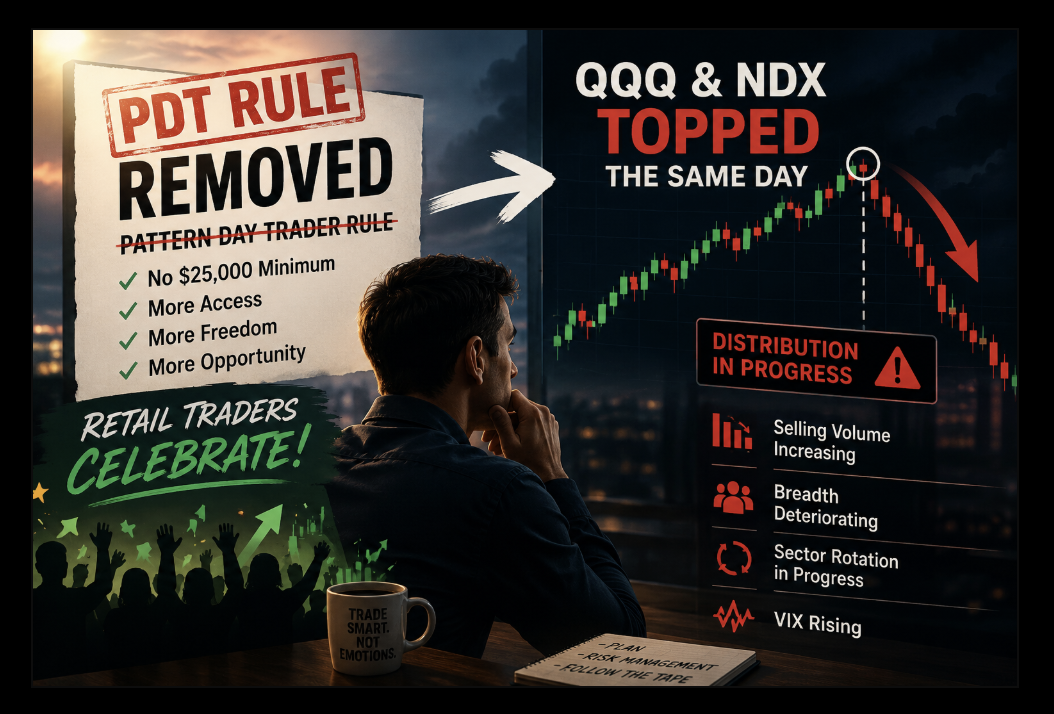
The moment the PDT rule removal was announced, retail trading communities erupted. Twitter, Reddit, Discord servers — everywhere you looked, everyday traders were celebrating what felt like one of the most long-overdue wins in the history of retail investing. Finally, the $25,000 barrier that kept smaller accounts from day trading freely was gone. The playing field was finally level. It felt like a victory, until I looked at the chart. The QQQ and NDX put in their exact top the same day. Not a week or a month later, but the same day the retail community was celebrating maximum market access, the indexes peaked and began selling off. So the question every serious trader needs to sit with right now is this: was that a coincidence — or was it one of the most reliable contrarian signals in market history playing out in real time, right in front of everyone too busy celebrating to notice?
What the PDT Rule Was — And Why Everyone Hated It
The Pattern Day Trader rule was a FINRA regulation requiring any trader making four or more day trades within a five-business-day period to maintain a minimum account balance of $25,000. It created a two-tiered system where wealthy traders could day trade freely while smaller accounts were locked out entirely. The argument for removal was compelling: an arbitrary barrier that penalized small traders without meaningfully protecting them from real risk. However, the argument against was equally valid: the friction existed for a reason, and removing it in a market already running hot has consequences that don’t always show up immediately. PDT rule removal was the most requested regulatory change in retail trading for years. When it finally happened, the reaction was exactly what you’d expect. What happened in the market right after was not.
The Chart That Changes Everything
The QQQ and NDX had been in a strong sustained uptrend — and on the exact day the PDT removal was announced and celebrated, the indexes put in their high and began selling off. This isn’t cherry-picked data or hindsight bias. The timing is documented, the chart is clear, and the correlation is impossible to ignore. In markets, the moment maximum retail participation is enabled is often the exact moment institutional money begins to exit. The logic is straightforward: institutions don’t announce their exits. They use liquidity events — moments of high volume and surging retail enthusiasm — to quietly distribute their positions to the buyers flooding in. A regulatory change opening the door to millions of new day traders creates precisely that liquidity event. The PDT removal didn’t cause the top. The top was likely already forming. But the removal may have been the clearest possible signal that it was here, and almost nobody was paying attention because they were too busy celebrating.
This Has Happened Before
This isn’t the first time a retail win has coincided with a market top. When major brokers eliminated trading commissions in 2019, retail volumes surged — and the market topped shortly after, before COVID accelerated what was already a deteriorating tape. In 2021, the height of retail euphoria — GameStop, AMC, endless Reddit momentum — coincided almost perfectly with the peak of the speculative bubble in growth and tech stocks. The most excited retail trading community in history called the top without knowing it.
Crypto tells the same story repeatedly: every time a new wave of retail access was celebrated — new exchanges, ETF approvals, mainstream coverage — the asset class was near or at a local top. The pattern is consistent and uncomfortable: when markets become maximally accessible to retail participation, it often signals the easy money has already been made, and institutions are positioning to exit into the enthusiasm just arriving. This isn’t a conspiracy. It’s market structure. Institutions need liquidity to exit large positions. Retail enthusiasm provides exactly that liquidity. The PDT removal fits this framework perfectly — and the chart confirmed it in real time.
What This Means Right Now
Let’s be clear about what this signal means and what it doesn’t. The PDT removal topping signal is not a prediction that the market is going to crash. It is a warning that traders should be paying very close attention to what comes next. Distribution tops rarely announce themselves with a single catastrophic down day. They look like sideways chop, rolling sector weakness, and gradual deterioration that feels like noise until it isn’t. Four things are worth watching closely right now.
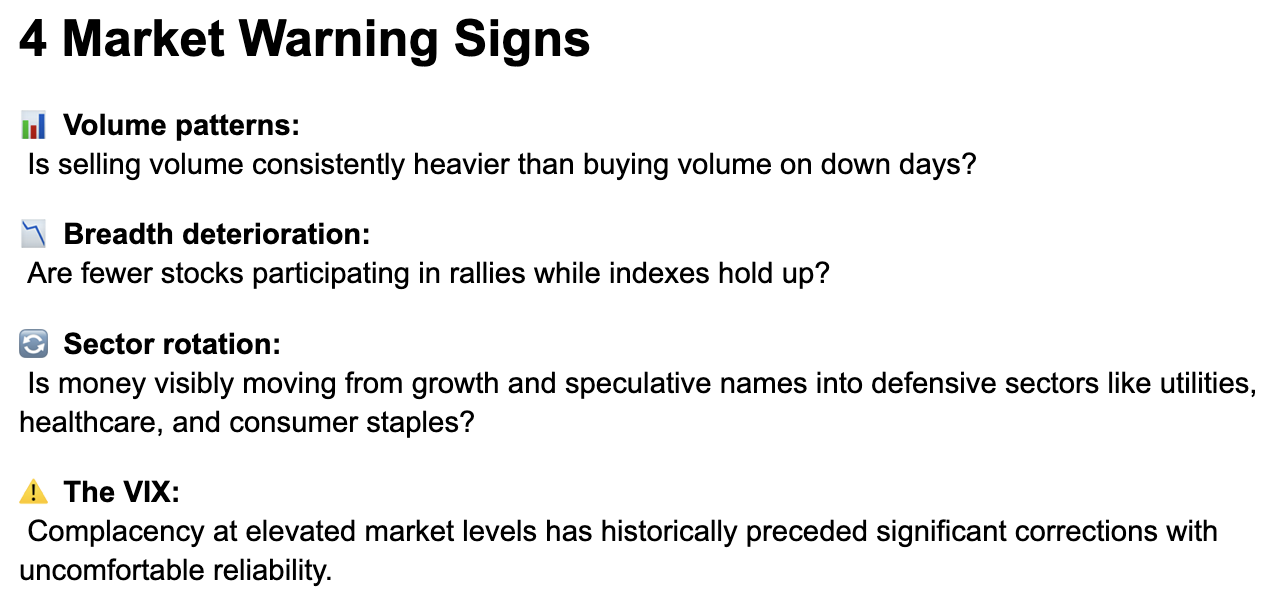
The scenario where the signal is wrong deserves acknowledgment too: if retail enthusiasm translates into sustained genuine buying power and earnings continue to beat expectations, the top call fails. Always define your risk. The signal is compelling. It is not infallible.
How to Navigate This with Trade Ideas
Whether this turns out to be the top or just a pause, the right response is the same: tighten your process and let the data guide your decisions. Use Trade Ideas relative strength scanners to identify which sectors are holding up and which are beginning to show distribution — money tells you where it’s going before the headlines confirm it. Set alerts on key QQQ and NDX support levels. Watch for unusual volume on down days in previously strong names — institutional distribution leaves footprints in the tape that Trade Ideas surfaces in real time. Reduce position size, tighten stops, and let the market confirm direction before pressing.
The PDT rule removal was genuinely good news for retail traders in isolation — more access, more freedom, more opportunity. But markets don’t operate in isolation. They operate in context, and the context of maximum retail enthusiasm arriving at a market peak is one of the oldest and most reliable stories in financial history. The PDT rule is gone. The $25,000 barrier is history. Just make sure you’re not the retail trader providing the exit liquidity for the institutions who already knew that.
Trade Ideas was recently recognized by FeedSpot as one of the Top 15 Trading Education Blogs on the web — a reminder that retail traders need more than access. Feedspot is an RSS Reader that lets you subscribe to blogs, news sites, and any website you want to keep up with. They need education, structure, and tools that help them understand what the market is actually doing in real time.
Log into Trade Ideas today, run your relative strength and distribution scans, set your alerts on key levels, and let the platform tell you what the tape is actually saying, because right now, reading the market correctly matters more than it has all year.