
Par for the Course: What a PGA Pro Taught Us About the Stock Market
Par for the Course: What a PGA Pro Taught Us About the Stock Market
We’ve talked about golf and trading before on this blog, but this time, we’re flipping the script. Every other comparison you’ve read comes from the trader’s perspective: the investor who picked up golf and started noticing uncanny parallels between their swing and their strategy. This isn’t that story. This is the story of Justin — a PGA touring professional and certified golf instructor who decided to learn how to trade stocks.
Of all the comparisons between trading and other disciplines, none is more complete or more honest than golf. Both are subjective — the swing is yours, the strategy is yours. Both will test your character and expose the parts of yourself you’d rather keep hidden. Both will reward your patience and punish your ego. But beneath all the psychological warfare, it always comes down to one battle: you against yourself.
The Yardage Book and the Stock Chart: The Moment Everything Clicked
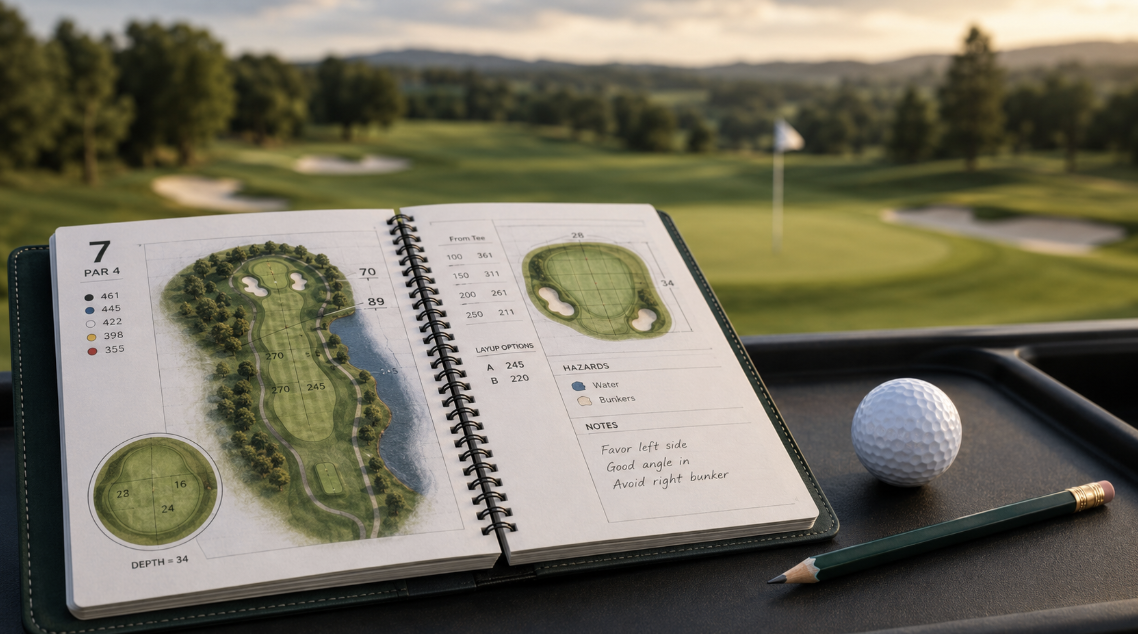
To understand Justin’s journey, you first have to understand what a yardage book means to a PGA professional. For non-golfers, a yardage book isn’t just a map of the course — it’s a complete, obsessively detailed risk management document. Every hole is charted, every distance measured, every hazard and danger zone documented. It tells a professional golfer exactly where the danger is, where the safe landing zones are, and how to navigate the course while protecting their round. At its core, it is a tool for managing risk and finding the path of least resistance on every shot. So after explaining to Justin that a stock chart does for traders exactly what a yardage book does for golfers, something clicked. To a trader, a stock chart maps the danger zones, identifies the safe plays, shows you where not to go, and where the opportunity lies. The language was different, but the game was the same.
You can’t expect to progress well as a trader without learning how to read a stock chart. Just as you can’t expect to progress well as a golfer without knowing how to read a yardage book.
Reading the Green — The Trader’s “Aha” Moment
That satisfying moment when a golfer reads the green perfectly and sinks a putt is pure pattern recognition. Trading offers the same rush: that feeling of “I saw it before it happened,” reading a chart and watching the market confirm your analysis.
The moment when you see what you visualized play out in real time is addictive. Whether that’s reading the green to anticipate where the ball will land or analyzing the chart to see where the stock price will fall, the magic of seeing things play out exactly as they should is one of the most satisfying moments you can experience. For Justin, linking these moments made trading relatable and showed that success in both fields starts with learning to trust your process and instincts.
The Range vs The Course: Why the Simulator Lies to You
Here’s where the comparison stops being inspiring and starts being uncomfortably honest. Every golfer knows the feeling. You’re killing it at the range, sinking every putt on the practice green, looking like a pro in the simulator — then you show up to play a real round, and everything falls apart. The swing that felt natural an hour ago suddenly feels foreign. The nerves arrive, the fluidity disappears, and your ego gets the best of you.
Trading is the same in the simulator. Traders who nail every call in practice—with no real money at risk—often fall apart when they go live. The moment real money is involved, the brain changes; just like in golf, raised stakes shift everything. Once emotions are invested, a loss that meant nothing in practice feels personal, and wins get cut too early out of fear. This isn’t weakness; it’s human nature, and it happens to nearly every trader or golfer making the jump from practice to performance. Those who overcome it recognize and name it, then keep showing up until the pressure feels familiar.
It’s You Against Yourself — The Deepest Crossover
Remove the charts and clubs, the tickers and scorecards—and at the core of both golf and trading is the same internal contest. Both pursuits completely reveal a person’s character, confronting ego, impatience, greed, fear, and overconfidence. Confidence builds, you think you’ve mastered the game, but then the market or green quickly reminds you otherwise. There is no hiding—eventually, your true character comes face-to-face in the mirror. So why do we keep coming back?
One Good Trade. One Good Round
Here’s what nobody warns you about before you start either game: it only takes one. Just when you are about to throw your clubs away or cash out of the market, something pulls you back. One round where the drives are pure, the irons are dialed, and the putts are dropping— and you’re booking your next tee time. One trade where the entry was clean and the stock did exactly what the chart said— and suddenly you’re back in it. It only takes one win to make every loss feel like tuition for that exact moment. This is what separates the people who find success from the ones who walk away. The ones who grind through the bad rounds and the losing streaks, who show up the next morning with the same process regardless of what yesterday looked like — those are the ones who eventually realize the struggle was the whole point.
Nothing Worth Having Comes Easy
Justin will tell you—golf is not for the faint of heart. Players who make it on tour tend not to be the most naturally talented, but those who diligently return after setbacks, analyze mistakes, adapt, and compete again. The market demands similar qualities. Lasting traders absorb losses, learn from mistakes, and come back stronger. Grit, resilience, and patience provide the edge in both fields. There are no shortcuts—just the discipline to show up despite resistance.
Justin came into trading as a PGA professional who had never read a stock chart. He leaves this story understanding he’d been preparing for this game his entire career — he just didn’t know it yet. Trading, just like golf, has never been easy, but that’s what makes it worth it.
Whether you’re working on your swing or your strategy, you need the right yardage book to navigate the course. Trade Ideas is that yardage book — real-time data, powerful scanners, and tools built to help you read the market the way a tour pro reads a green. Start reading the green today.