
Summer Vacation Trading Strategy: How Low Volume Creates Profit Opportunities
Summer Vacation Trading Strategy: How Low Volume Creates Profit Opportunities
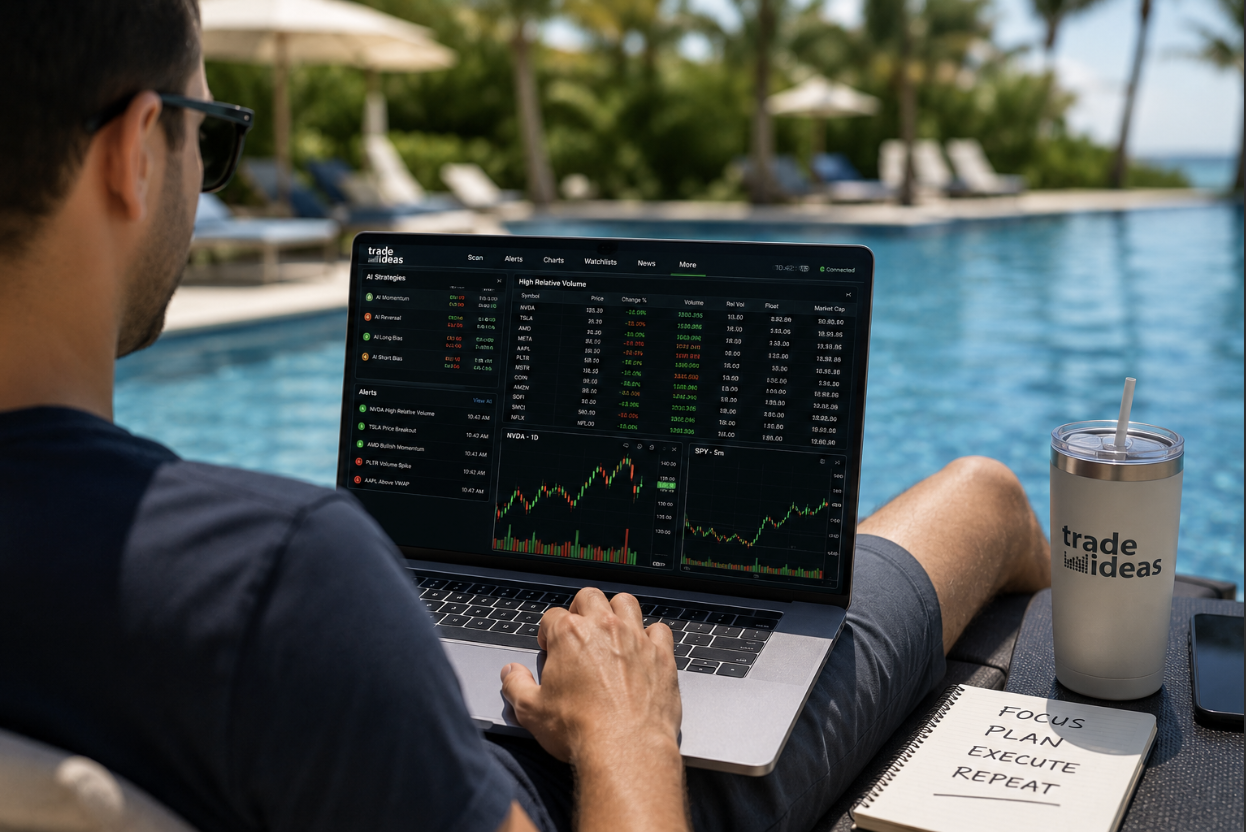
Summer trading often feels different from the rest of the year. With many traders and institutions less active, market volume can drop, spreads can widen, and price moves may become less predictable.
That does not mean traders should avoid the market completely. It means they need a more selective summer trading strategy built around liquidity, timing, and risk management.
In this article, we’ll look at how low-volume summer markets behave, the risks of trading low volume stocks, and how traders can find better opportunities during slower market conditions.
Understanding Summer Market Dynamics
The summer months often bring a noticeable slowdown in market activity. As many institutional traders and investors step away for vacations, overall trading volume across the market tends to decline. Some market-volume analyses estimate that summer trading volume can fall by around 20–30% during June through August, especially around major holidays.
Lower participation can change the way stocks move. Price action may become less consistent, bid-ask spreads can widen, and even smaller orders may create larger-than-normal price swings. This is one reason why summer market volatility can feel unpredictable compared to busier trading periods.
For active traders, these changing conditions require a more careful approach. A strong low volume trading strategy focuses less on chasing momentum and more on trading liquid stocks with cleaner setups and reliable volume.
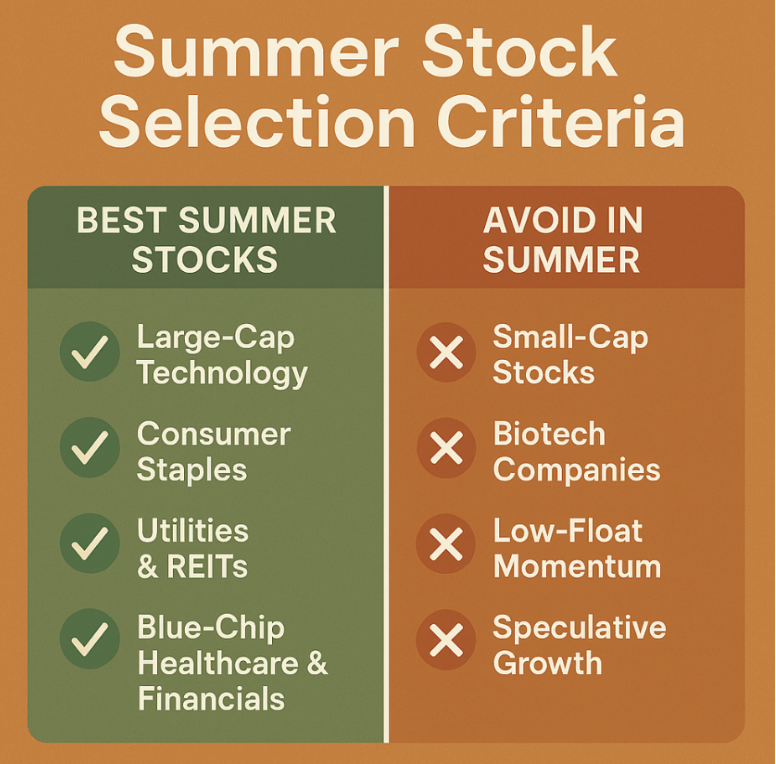
Summer Stock Selection Criteria
A strong summer trading strategy starts with liquidity. Starting with a minimum threshold of 500,000+ daily volume and $1 billion+ market capitalization to ensure positions can be entered and exited without significant market impact.
Preferred Sectors for Summer Trading:
- Large-cap technology stocks (maintain institutional interest year-round)
- Consumer staples companies (consistent trading volumes, defensive characteristics)
- Utilities and REITs (attract income-focused investors during summer)
- Established blue-chip healthcare and financial names (fundamental analysis remains relevant)
Stocks to Completely Avoid:
- Small-cap stocks (volume can drop 50-75% during summer)
- Biotech companies (vulnerable to binary news events in thin markets)
- Low-float momentum plays (depend on heavy retail participation)
- Speculative growth names (reduced institutional coverage creates dramatic swings.
This disciplined approach to stock selection acts as the first line of defense against summer trading pitfalls, ensuring that even if market conditions deteriorate further, it provides reasonable exit opportunities when strategies need adjustment.
Timing and Risk Management Strategies
Timing matters much more during summer trading conditions. The first hour after the market opens, especially between 9:30 AM and 10:30 AM ET, usually offers the strongest volume and the cleanest price movement. This is when overnight news, earnings reactions, and institutional orders are most active.
By contrast, midday trading can become extremely slow during the summer months. Lower participation often leads to weaker momentum, wider spreads, and choppier price action, making it harder for trades to follow through.
To manage risk in low-volume summer markets:
- Reduce position size: Trade smaller than usual to account for thinner liquidity and sudden price swings.
- Use limit orders: Avoid market orders when spreads are wide, as they can lead to poor fills.
- Avoid forcing trades: Fewer high-quality setups are better than chasing weak moves.
- Watch volume before entering: Make sure the stock has enough activity to support both entry and exit.
- Be careful with midday trades: Lower volume during this period can increase the risk of false moves.
- Plan exits before entering: Know where you will take profits or cut losses before placing the trade.
A practical low volume trading strategy is usually more selective and patient. Instead of overtrading, traders often focus on stronger liquidity, cleaner setups, and disciplined execution during slower market conditions.
Summer Opportunities
Despite the challenges of reduced summer volume, astute traders can capitalize on several high-probability opportunities that emerge specifically because of the thin trading environment. Earnings surprises are dramatically amplified during the summer months, creating exceptional risk-reward scenarios for traders who thoroughly research under-followed summer earnings. Technical breakout opportunities become particularly compelling when accompanied by volume confirmation, as the reduced resistance from lighter institutional selling can allow quality setups to achieve much larger percentage gains than similar patterns during peak trading seasons.
Mean reversion plays offer perhaps the most consistent summer profits, as high-quality large-cap stocks often become oversold during vacation-driven selling sprees. These provide attractive entry points for patient traders willing to accumulate positions in fundamentally sound companies that will likely recover when institutional buying returns in September. The key to capturing these opportunities lies in maintaining strict quality standards, focusing on liquid, well-established companies with strong fundamentals, while providing the upside potential that makes summer’s increased risks worthwhile.
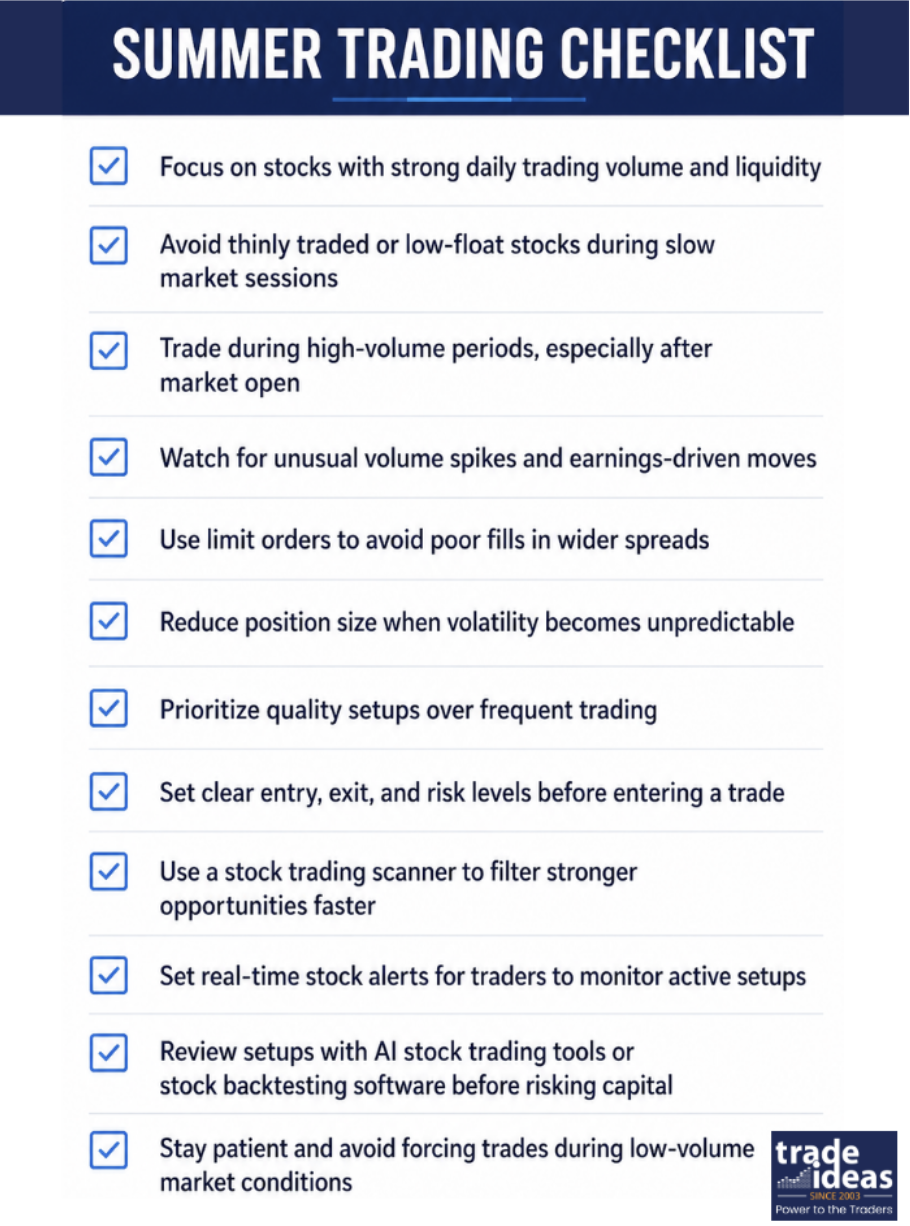
Summer Trading Checklist
Before trading during the summer months, make sure your strategy is built for lower-volume market conditions:
How to Use Trade Ideas to Find Better Summer Trading Setups
Low-volume markets can make it harder to separate real opportunities from random price movement. This is where tools like real-time scanners and alerts can help traders stay more selective during slower summer conditions.
A stock trading scanner can help filter for stocks with stronger liquidity, unusual volume, and active price movement instead of manually searching through hundreds of charts. During summer trading, this can help traders focus only on stocks that still show meaningful activity and cleaner setups.
Many active traders also use stock alerts for traders to monitor unusual volume spikes, breakouts, or momentum shifts in real time. Instead of constantly watching the market, alerts can help traders react faster when a stock meets specific conditions.
For traders looking to refine their process further, AI stock trading tools and stock backtesting software can help evaluate whether certain setups have historically performed well under similar market conditions. This can be especially useful during low-volume markets, where false breakouts and inconsistent price action become more common.
By combining liquidity filters, real-time alerts, and data-driven analysis, traders can approach summer markets with a more disciplined and focused strategy.
Mastering Vacation Trading
Implementing a successful summer trading strategy begins with building a carefully curated watchlist that prioritizes liquidity metrics such as:
- Minimum 500,000 daily volume and $1 billion market capitalization,
- Strong balance sheets
- Consistent earnings
- Established market positions that can withstand the volatility amplification of thin trading environments.
Essential technology tools include setting up volume alerts to identify unusual activity that might signal genuine opportunities versus algorithmic noise. Employ sophisticated order management systems to break large orders into smaller pieces and minimize market impact. This allows traders to utilize limit orders rather than market orders to avoid the wider spreads that characterize summer trading.
By combining these practical elements, traders can navigate the unique challenges of summer while positioning themselves to capitalize on the legitimate opportunities that emerge from reduced market participation. For more on navigating summer doldrums, join Trade Ideas today.
Final Thoughts About Summer Trading Strategy
Summer markets can behave very differently from the rest of the year, but that does not mean traders need to avoid them completely. With lower participation, wider spreads, and less predictable price action, the key is to stay selective and focus on setups with real liquidity and clear trade potential.
A strong summer trading strategy comes down to timing, risk management, and using the right tools to find better opportunities. Instead of manually searching through hundreds of stocks, Trade Ideas can help you scan for active movers, track unusual volume, set real-time alerts, and stay focused on the setups that matter most.
Start smarter summer trading with Trade Ideas today and find better low-volume market setups before the opportunity passes.
Frequently Asked Questions
Why Selectivity Becomes More Important in Summer
Lower summer trading volume can make many setups unreliable. Traders often focus on liquid stocks with stronger volume, tighter spreads, and clear catalysts instead of chasing speculative or thinly traded names that may experience unpredictable price swings.
What Happens When Trading Volume Drops in Summer
When trading volume drops, liquidity becomes thinner and price action can become less stable. Stocks may experience wider bid-ask spreads, slower momentum, and sharper moves caused by smaller orders or sudden news-driven activity.
Why Low-Volume Markets Can Create Opportunity
Low-volume markets can create opportunities because price movements often become amplified during thinner trading conditions. Traders who focus on liquid stocks, unusual volume activity, and disciplined setups may find stronger short-term moves and cleaner reactions to catalysts.