
Prediction Markets Explode in the USA: How Kalshi and Polymarket Are Changing Betting Forever
Prediction Markets Explode in the USA: How Kalshi and Polymarket Are Changing Betting Forever
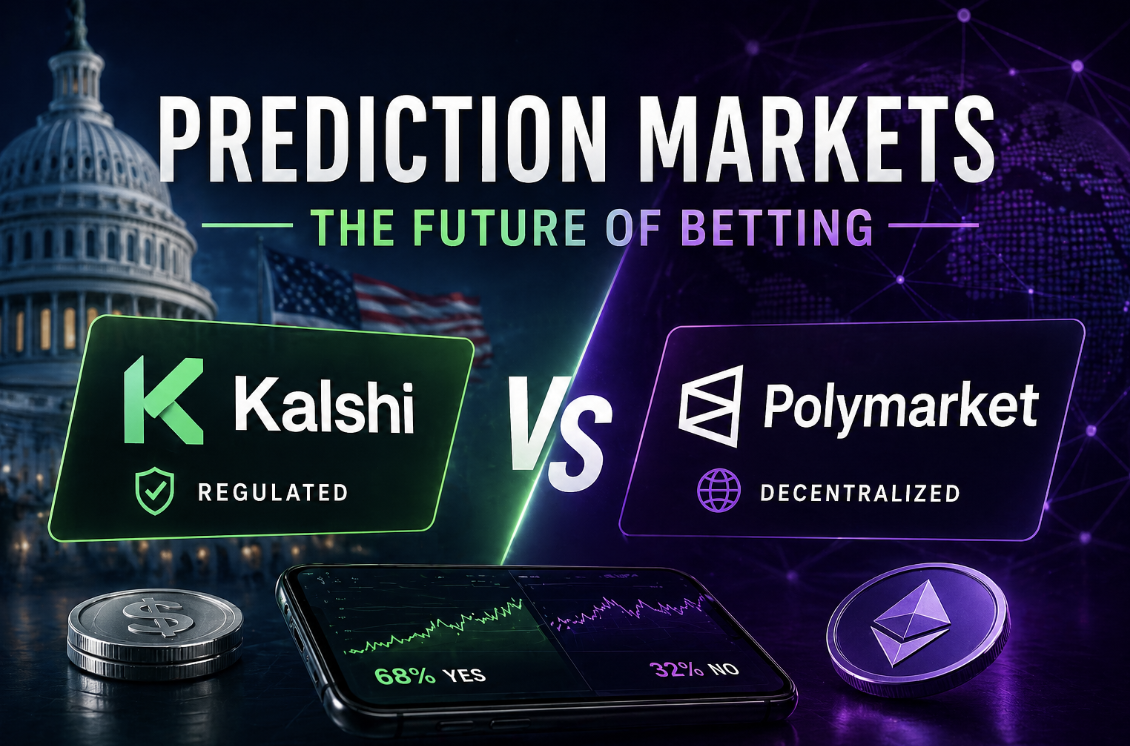
Prediction markets are rapidly emerging as a mainstream $5+ billion industry in the USA, fundamentally changing how Americans invest in real-world outcomes. By 2026, these markets—led by Kalshi and Polymarket—will have evolved into established powerhouses that make alternative investing accessible and sophisticated. This transformation, catalyzed by regulatory breakthroughs in 2024, has positioned prediction markets as rivals to traditional options markets in both volume and institutional participation. Now, participants have unprecedented opportunities to profit from diverse real-world events, supported by proven track records and institutional-grade infrastructure.
Prediction Markets in 2026
Prediction markets in 2026 are much more advanced than in their early days. Now, participants trade contracts based on what will happen in real-world events. These platforms help people discover prices for things like Federal Reserve decisions and Supreme Court rulings. Crowd-sourced probability assessments from these markets often beat traditional polling and expert predictions by a significant amount.
The wisdom of crowds principle has been very effective over the past two years. Financial incentives encourage participants to make accurate predictions rather than guess. Unlike polls, prediction markets require real money bets. This encourages honest assessments and careful research. By 2026, clear regulations will attract major institutional players. Hedge funds, family offices, and even some pension funds now invest in prediction markets. This increases liquidity and improves price efficiency. Informed retail traders still find good opportunities.
Kalshi: The Regulated Market Leader
Kalshi has become America’s main regulated prediction market exchange since 2021. Now, it has more than $100 million in monthly trading volume. Institutional partnerships support its credibility. The CFTC-regulated exchange has expanded. It now includes contracts not just on politics and economics but also on climate, technology, and culture.
- Current trading opportunities include Federal Reserve interest rate decisions with:
- Unprecedented accuracy
- Economic data releases on employment
- Inflation
- GDP growth
- Expanded political coverage (state-level elections and policy outcomes)
- Climate and weather events affecting commodity markets
- Technology milestones (AI development and crypto regulations)
By 2026, Kalshi’s contract structure will be more advanced. There are options for larger positions and contracts lasting 12-18 months. The platform now processes over $1 billion in annual volume. About 40% of the trading volume comes from institutions. Retail users still have good access through mobile apps and educational resources.
Regulatory benefits now include integration with major brokerage platforms. There are tax-advantaged retirement fund options and additional consumer protections, similar to SIPC insurance. International expansion can be achieved through regulatory partnerships.
Polymarket: The Global Crypto Alternative
Polymarket is now the world’s largest decentralized prediction market. It processes over $2 billion each year using its Polygon-based system. The platform keeps a crypto-native approach that appeals to digital asset investors. Its global reach and wide event selection make it popular for international politics, crypto, and culture.
By 2026, unique features include unlimited position sizes across most markets to attract institutional crypto funds, integration with DeFi protocols for yield generation, an advanced mobile interface with social trading features, and real-time analytics rivaling those of traditional financial terminals.
There are now many more trading categories. These include US and international politics, crypto, DeFi predictions, real-time sports odds, entertainment like box office and awards, and business forecasts for IPOs and mergers. Technical barriers have decreased significantly. Wallet integration is simpler, while Fiat-to-crypto onramps reduce friction. Institutional custody solutions exist for large traders, and regulatory compliance has improved in many jurisdictions.
2026 Platform Comparison: Choosing Your Strategy
The maturation of both platforms has created distinct advantages for different trader types. Kalshi:
- Offers full regulatory compliance
- Attracts conservative institutional money
- Provides seamless integration with traditional finance infrastructure
- Offers comprehensive tax reporting and accounting support
- Offers predictable fee structures with transparent pricing.
Polymarket lets users access global markets without location restrictions. There is more leverage for advanced strategies. Active traders enjoy lower costs and faster innovation with new market types.
Payment and access differences remain significant: Kalshi accepts traditional banking methods with instant ACH transfers, while Polymarket requires cryptocurrency, with USDC as the standard. User experience reflects these differences: Kalshi offers institutional-grade trading interfaces, while Polymarket provides a social, mobile-first experience.
Advanced Trading Strategies for 2026
To trade successfully in 2026, you need more than simple event bets. Arbitrage is possible between platforms, with 2-5% price gaps on major events. Trading on both platforms lets you improve execution and spread risk. Information edge tactics have advanced: they now include reading economic data, early political polling, tracking sentiment with AI, and following regulations. Pro traders use analyst teams for each of these areas. Traders use portfolio theory, analyze event correlations, size positions using the Kelly formula, and hedge with options.
The 2026 Investment Landscape
Prediction markets are now recognized as an asset class. Institutional adoption has led to $5+ billion in yearly volume and integration with regular portfolio management. Academic research supports the returns, and regulations are clearer in big markets.
Portfolio diversification offers investors demonstrated low correlation with equity markets, effective protection against political and policy uncertainty, opportunities to capture short-term alpha, and access to alternative data sources that can enhance traditional investment strategies. From 2024 to 2026, good prediction market traders saw 15-25% annual returns. These results showed lower volatility than those of stocks. Outcomes still depend on the strategy and focus area.
Risks and Current Considerations
Platform risks remain significant. These include regulatory risks as oversight expands, technology risks during periods of heavy use, such as during major elections, liquidity risks in smaller, specialized markets, and resolution risks that affect trader confidence.
Market risks also include greater competition from institutions, fewer opportunities for retail, advanced trading by firms, information advantages for connected participants, and concerns about manipulation in smaller events.
Additionally, tax implications have been clarified significantly, with prediction market winnings treated as capital gains in most jurisdictions, clear reporting requirements through platforms, and integration with major tax preparation software.
Prediction Markets as Mainstream Finance
By 2026, prediction markets will be recognized as legitimate financial instruments. They offer sophisticated investors new ways to generate alpha and hedge portfolio risks. Kalshi and Polymarket are mature platforms with strong track records, institutional participation, and clear regulations. This allows traders to participate with confidence in Q2.
Success requires treating prediction markets as sophisticated financial instruments that demand research, risk management, and systematic approaches rather than a gambling mentality. Choose platforms based on your regulatory preferences, technical comfort, and target markets, then start with small positions while developing expertise in specific domains.
Prediction markets reward accurate judgment and discipline, not just guesses. Good traders use knowledge and sound strategies for sustainable profits. Treat these markets like any other serious investment for the best results. To learn more about how to take advantage of opportunities like Kalshi this spring and equip yourself with the necessary tools, join Trade Ideas today.