
Paper Trading for Beginners: Practice Like a Pro Without Risking a Dollar
Paper Trading for Beginners: Practice Like a Pro Without Risking a Dollar
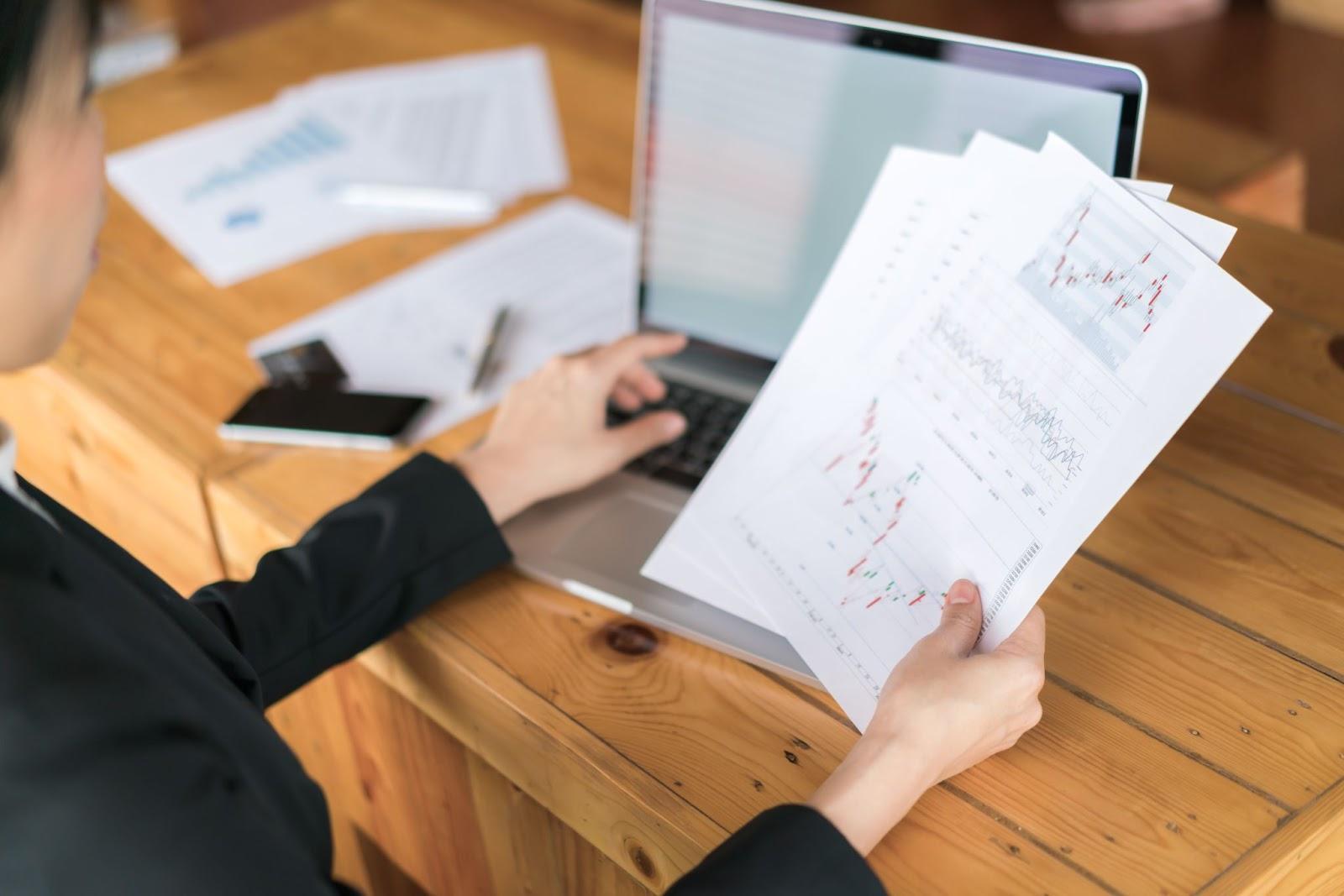
Ready to dive into trading but scared of losing your hard-earned cash? Paper trading is your risk-free ticket to mastering the markets before you put a single real dollar on the line. This simulated trading lets you buy and sell stocks, forex, or crypto using virtual money, mimicking real market conditions without financial stakes.
Most new traders lose money early on. The FINRA Foundation’s 2025 report on U.S. investors found that respondents answered an average of 5.3 out of 11 investing questions correctly. If you’re new to trading, paper trading lets you practice placing orders and see how price changes affect your balance before you risk real money.
That is why paper trading is a game-changer for building skills and confidence. Whether you’re eyeing day trading or long-term investing, this stock trading for beginners roadmap will walk you through how to start, choose platforms, and practice like a pro, all without risking a dime.
2026 Day Trading Rule Update: In April 2026, the SEC approved changes to FINRA Rule 4210, replacing the pattern day trader designation and its $25,000 minimum equity requirement with new intraday margin standards. The changes took effect on June 4, 2026, but brokers have until October 20, 2027, to implement them. Before moving from paper trading to live trading, check your broker’s requirements and practice managing risk with virtual trades.
| Quick Answer: What is Paper Trading?Paper trading lets you practice buying and selling stocks with virtual money. A trading simulator uses live or historical market prices so you can test a strategy and track gains and losses without risking your own money. |
How Does Paper Trading Work?
Paper trading uses a market simulator that follows real or historical price movements without sending actual orders to a stock exchange. Here’s what happens when you make a simulated trade:
- Market data feeds the simulator: The platform displays stock prices using real-time, delayed, or historical market data, depending on the service.
- Orders are processed virtually: When you submit a buy or sell order, the simulator determines whether it would execute based on its pricing and order-fill rules. No actual shares change hands.
- Positions reflect market movements: As prices change, the simulator updates your unrealized gains or losses and tracks your available virtual funds.
- Completed trades update your results: Once a position closes, the simulator calculates the realized profit or loss and adjusts your virtual account balance.
- Performance data records your progress: Trading history and performance reports help you assess profitability, trading frequency, and risk management.
Because orders are simulated, paper trading cannot fully reproduce real-market execution, including slippage, liquidity constraints, and the emotional pressure of risking your own money.
Why Should You Practice Trading Before Going Live?
- Practice without risking money: Learn from mistakes using virtual funds.
- Build trading skills: Practice reading charts, placing orders, and using trading tools.
- Test your strategy: See how your approach performs in different market conditions.
- Try AI-assisted tools: Learn how scanner alerts and Holly AI signals fit into your trading process.
Benefits and Limitations of Paper Trading
Here’s a look at the good and not-so-good sides of practicing trading without real money:
| Benefits | Limitations |
| Practice safely: Learn trading basics without risking real money. | Less emotional pressure: Virtual trades don’t recreate the fear or urgency of trading with real money. |
| Test strategies and tools: Practice with charts, orders, scanners, and AI signals. | Results may differ live: Simulators may not reflect fees, slippage, fast price moves, or actual order fills. |
| Build habits: Practice following a plan and managing position sizes. | Risk of overconfidence: Strong simulated results don’t guarantee success in live markets. |
| Learn the platform: Get familiar with its features before trading live. | Unrealistic account size: Reset virtual funds to match the amount you expect to trade. |
How to Start Paper Trading: 5 Simple Steps
1. Choose a Paper Trading Platform
Select a platform with real-time data, a user-friendly interface, and robust tools. Top picks right now include:
- Trade Ideas: Built for active day traders who want to practice on live scanner alerts. Simulated trading is included with paid plans and runs on the same real-time data as the scanner, while Holly AI signals and OddsMaker backtesting are part of the Premium tier. A free account gives you the web dashboard with 15-minute delayed data to learn the layout first.
- Webull: Free, mobile-friendly, with a “paperTrade” button for instant access. Great for stocks and options.
- Thinkorswim (Charles Schwab): Best for complex strategies, with desktop and mobile support. The paperMoney account starts with $100,000 in virtual funds and requires a Schwab account.
- Interactive Brokers: Multi-asset practice with $1,000,000 in virtual funds. The paper account comes with your IBKR account.
Looking for the best paper trading platform for scanner-driven momentum trading? Pick the one whose data and tools match how you plan to trade live, not the one with the biggest virtual balance.

2. Set Up a Demo Account
Most platforms offer free demo accounts with virtual funds (10,000–e.g., 1 M). To get started, you typically just need to sign up with an email, download the platform’s app or software, and then activate paper trading mode. Then reset the balance to a realistic amount: if you plan to start live with $2,000, practice with $2,000, not $1,000,000.
3. Define Your Trading Goals and Strategy
Before trading, set clear objectives. Are you practicing day trading, swing trading, or long-term investing? Choose a strategy:
- Buy-and-Hold: Buy stocks and hold for growth (e.g., Apple).
- Swing Trading: Trade short-term trends (1–5 days).
- Trend Following: Ride market momentum using indicators like RSI.
- Gap and Go: Use a gap scanner to find stocks opening sharply higher on news or earnings, then practice entries on the first pullback with a defined stop.
- Low-Float Momentum: Use a low-float or penny stock scanner to track fast movers, and keep your practice size small. These stocks can spike and reverse in minutes.
Outline entry/exit rules, risk-reward ratios (e.g., 2:1), and position sizes. Start with a 1–2% risk per trade.
4. Practice Trading and Risk Management
Use virtual funds to execute trades. Practice placing market, limit, and stop-loss orders. Monitor charts, use indicators (e.g., MACD, moving averages), and set stop-losses to limit losses. Track performance via platform tools or a trading journal. Test strategies across bull and bear markets to spot weaknesses. To make practice count, add these habits:
- Trade real alerts: Run streaming alerts and Top Lists during the premarket and the open, and paper trade only the alerts that match your written rules. Trade Ideas alerts fire on every trade rather than waiting for a candle to close, so you practice with the timing you will face live.
- Backtest first: Use a backtester such as OddsMaker to see how a scanner-based strategy would have performed on historical data before you paper trade it live.
- Study AI signals, don’t follow them blindly: Each Holly AI signal comes with an entry and a stop, usually about 3% from entry, and gaps can make a loss bigger. Paper trade the signals to learn why they trigger.
- Automate last: Once your rules are proven, test automated trading (Money Machine in Trade Ideas) in a simulated account before letting it place real orders.
5. Analyze and Transition to Live Trading
Review trades weekly to identify patterns. Did you exit too early? Overtrade? Adjust strategies based on metrics like win rate and profit/loss ratio. After 50–100 trades (2–3 months) with consistent profits, even after you subtract estimated slippage and fees, consider live trading with a small account (100–1,000). Start with low-risk assets like ETFs or blue-chip stocks. Because the PDT rule is gone, a small account may be able to day trade more freely, but brokers are phasing in the new framework through 2027, so confirm your broker’s current rules before you fund an account. Remember that paper trading results are hypothetical and do not guarantee live results.
Comparison Table: Top Paper Trading Platforms (2025)
Which is the best paper trading platform for you depends on what you trade and how you plan to go live. Use this table as a starting point.
| Platform | Assets Supported | Virtual Funds | Key Features | Cost |
| Trade Ideas | US stocks and ETFs | Simulated account | Real-time streaming scanner, Holly AI signals (Premium), OddsMaker backtesting, Money Machine auto-trading | Free web dashboard (15-minute delayed data); simulated trading with paid plans |
| Webull | Stocks, Options, ETFs | $1M | Mobile-first, real-time quotes | Free |
| Interactive Brokers | Stocks, Forex, Futures | $1M | Multi-asset, robust tools | Free (account required) |
| Thinkorswim | Stocks, Options, Futures | $100K | Complex layouts, analytics | Free (Schwab account required) |
| Webull | Stocks, ETFs, options, crypto, futures, and events | Virtual funds; amount may vary by feature | Mobile and desktop practice, including multi-leg options strategies | Paper trading is available through Webull. |
| thinkorswim paperMoney | Stocks, options, futures, and forex | $100,000 | Real-time simulated market, charts, scans, and performance tracking | Free for Schwab clients. |
| Interactive Brokers | Stocks, ETFs, options, futures, forex, bonds, and more | $1 million | Broad market access and simulated margin features | Requires a funded IBKR account. |
| TradingView | Stocks, forex, crypto, futures, and more | Customizable | Chart-based practice with indicators, order tools, and strategy testing | Paper trading is available to all users. |
| Power E*TRADE | Stocks, ETFs, options, and futures | $100,000 | Practice in a simulated version of the Power E*TRADE platform | Paper trading is included in the platform. |
| TradeStation | Stocks, options, and futures | Set up a simulated account | Switch between simulation and live trading within its platform | A funded account is required to get started. tradestation.com |
| NinjaTrader | Futures | Customizable simulator account | Order-entry simulator and Market Replay for practicing past sessions | Simulator is free; live streaming data is included for 14 days, then delayed data or a paid feed is needed. |
Tips for Successful Paper Trading
Use paper trading to practice a repeatable process, not just to collect simulated wins.
- Set a realistic balance: Match your virtual account to the amount you may eventually trade.
- Use current market data: Real-time prices matter for practicing entry timing, especially with fast-moving stocks.
- Set risk limits: Decide your position size and maximum planned loss before each trade.
- Keep a trade journal: Record your setup, entry, exit, reasoning, and result. Account for estimated fees and slippage.
- Focus your practice: Choose one market and setup, limit trades to those that meet your rules, and review your results regularly.
- Treat live trading as a separate step: Paper results don’t guarantee live performance. If you decide to trade with real money, start small and understand the risks.
Start Paper Trading Today
In today’s market, paper trading is your smartest move to kickstart your trading journey risk-free. By utilizing demo accounts offered by platforms like Webull and Thinkorswim, or a scanner-driven setup like Trade Ideas, you can practice with virtual funds, master essential strategies, and build the confidence needed for real markets.
Follow the straightforward steps of choosing a platform, setting clear goals, practicing diligently, analyzing your performance, and gradually transitioning. With discipline and consistent use of a trading journal, you’ll be well-prepared to trade live in a matter of months, not years.
So, pick a platform, open a paper trading simulator, and take the first step towards conquering the markets risk-free today!
Ready to practice on live momentum setups? Create a free Trade Ideas account to explore the web dashboard, then move up to a plan with simulated trading when you are ready to rehearse your strategy.
Frequently Asked Questions About Paper Trading
1. How long should I do paper trading before trading with real money?
There’s no one-size-fits-all answer. Some people practice for a few weeks, while others might spend several months. The key is to consistently “make profits” in your practice account and feel truly comfortable with your trading plan and the platform before you start with real money. Don’t rush it! A common benchmark is 50–100 trades over one to three months, but the quality of your results matters more than the calendar.
2. What is the best paper trading platform for day trading?
It depends on how you plan to trade live. Thinkorswim and Interactive Brokers suit traders who want broker-linked practice with deep tools, Webull is easy for mobile-first beginners, and Trade Ideas fits momentum traders who want to practice on real-time scanner alerts, Holly AI signals, and backtested strategies.
3. Did the end of the pattern day trader rule change how I should paper trade?
In one way, yes. The $25,000 minimum is gone, so smaller accounts can day trade more freely, which makes disciplined practice more important. Use your simulated account to rehearse intraday position sizing, stop-losses, and daily loss limits. Brokers are phasing in the new framework through 2027, so check your broker’s current rules.
4. Is paper trading a good first step in stock trading for beginners?
Yes. It lets you learn order types, charts, and risk control with no money at stake. Just remember that it can’t reproduce the emotions or the full costs of live trading, so treat it as practice for your process, then go live small.
5. What is the difference between paper trading and live trading?
Paper trading uses virtual money and simulated orders, so no real funds change hands. Live trading uses your money, and orders are sent to the market, where fees, execution conditions, and emotional pressure can affect results.