
Scanner vs. Screener: What are the differences?
Scanner vs. Screener: What are the differences?
By Katie Gomez
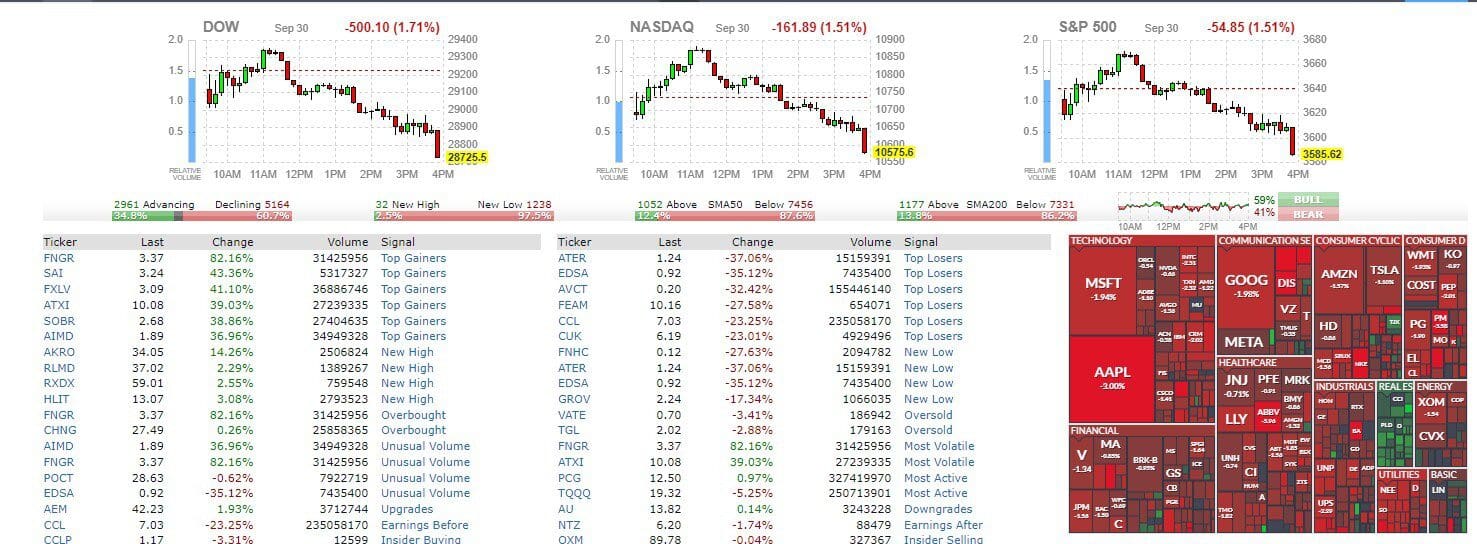
Technology has dramatically changed the world of trading over the last century. Those equipped and fortunate enough to use this technology will excel as traders. Many traders think they are using the best technology but are misinformed. Among the most common misconceptions is understanding the difference between a stock screener compared to a stock scanner. Many vendors confuse the issue by advertising their platforms as scanners, enticing you to earn your subscription, but most of those are just screeners in disguise.
That confusion has only grown as more platforms slap the word “AI” onto basic filtering tools, so it is more important than ever to understand what actually separates a genuine real-time scanner from a screener wearing a scanner’s marketing.
What Are Stock Scanners and Screeners?
Before comparing the two tools, it is important to understand what each one does and how they help traders find opportunities in the market.
What Is a Stock Scanner?
A stock scanner tracks market activity and finds stocks that meet specific conditions in real time. It helps traders identify price changes, volume spikes, breakouts, and other movements as they happen.
What Is a Stock Screener?
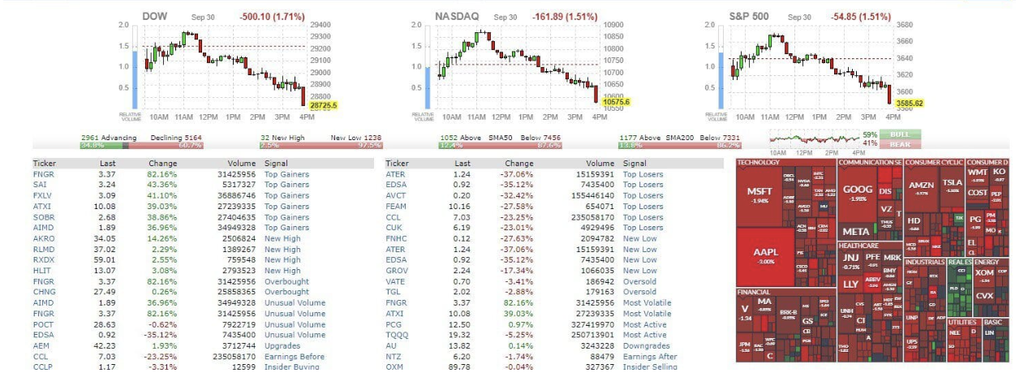
A stock screener helps traders filter stocks based on selected criteria such as price, market size, financial performance, or technical indicators. It is mainly used to research stocks and create a list of potential opportunities.
Understanding these differences makes it easier to decide which tool fits your trading approach. Let’s compare a stock scanner and stock screener side by side.
Stock Scanner vs Stock Screener: Key Differences
Now that you understand what each tool does, comparing their key differences can help you decide which one fits your trading approach.
| Feature | Stock Scanner | Stock Screener |
| Main purpose | Finds active trading opportunities in real time | Filters stocks based on selected criteria |
| Data type | Uses live market data | Uses financial, technical, or historical data |
| Best for | Day traders and active traders | Investors and research-focused traders |
| Timing | Used during market hours | Often used before making trading decisions |
| Helps answer | “What is moving right now?” | “Which stocks match my strategy?” |
| Common uses | Finding breakouts, volume spikes, and price movements | Building watchlists and analyzing potential investments |
Understanding the Workflow of Stock Scanners and Screeners
While both tools help traders find potential opportunities, they work differently. A scanner tracks live market activity, while a screener helps filter stocks based on selected conditions.
| Stock Scanner | Stock Screener | |
| How it works | Tracks real-time market activity and highlights stocks that match specific conditions. | Filters stocks using selected criteria like price, volume, fundamentals, or technical indicators. |
| Process | Set conditions → Monitor market → Receive matching opportunities | Select filters → Analyze results → Review potential stocks |
| Best for | Finding active trading opportunities and market movements. | Researching stocks and building watchlists. |
| Data focus | Live price changes, volume, and market activity. | Technical, fundamental, and historical data. |
| Ideal for | Day traders and active traders. | Investors and research-focused traders. |
How AI Has Changed Real-Time Market Scanning
The last two years have brought a wave of tools calling themselves “AI-powered,” which has muddied the scanner-versus-screener conversation even further. A screener with a chatbot layered on top of its filters is still a screener; it still produces a static snapshot of the market, not a live feed. True stock scanning software earns the “AI” label only when the AI changes what a trader can find or how quickly they can trust it: ranking thousands of real-time movers by live momentum, volume surges, and probability scores, rather than simply reading filter results back in plain English.
Trade Ideas’ Holly AI engines are a good example of that distinction. Each night, Holly backtests dozens of strategy variations against recent market conditions and publishes a ranked list of setups before the next session opens. During the trading day, those signals update dynamically as live conditions change, something a static screener, by definition, cannot do. That combination of overnight preparation and live, adaptive scanning is what separates a true trading scanner from a passive filtering tool, however modern its interface looks.
Scanners are the future of automated trading, yet many people still do not take advantage of them, using screeners instead (the more tedious basic version of a scanner). Traders using screeners have to manually refresh and click constantly to find the data they are trying to find, requiring more time, patience, and energy than need be.
On the other hand, scanners allow for an active, quick, and automated approach. While Trade Ideas offers leading trade alert software features, live trading, and education programs, our company is best known for our real-time market scanner.
Our Trade Ideas software has been on the cutting edge of trading technology for 20 years, as we launched our first market scanner in 2002. Our scanners use server-side technology, which entails a large data center to run the data and crunch numbers so that your computer doesn’t have to do the heavy lifting. Because our server farm monitors every transaction in the markets, the user has fewer steps to get through and is notified in real-time, unlike screeners. Compared to the screeners other companies use, our scanner offers instantaneous results (a benefit they cannot match), which is why Trade Ideas is the #1 platform for watching the market in real-time (image below).
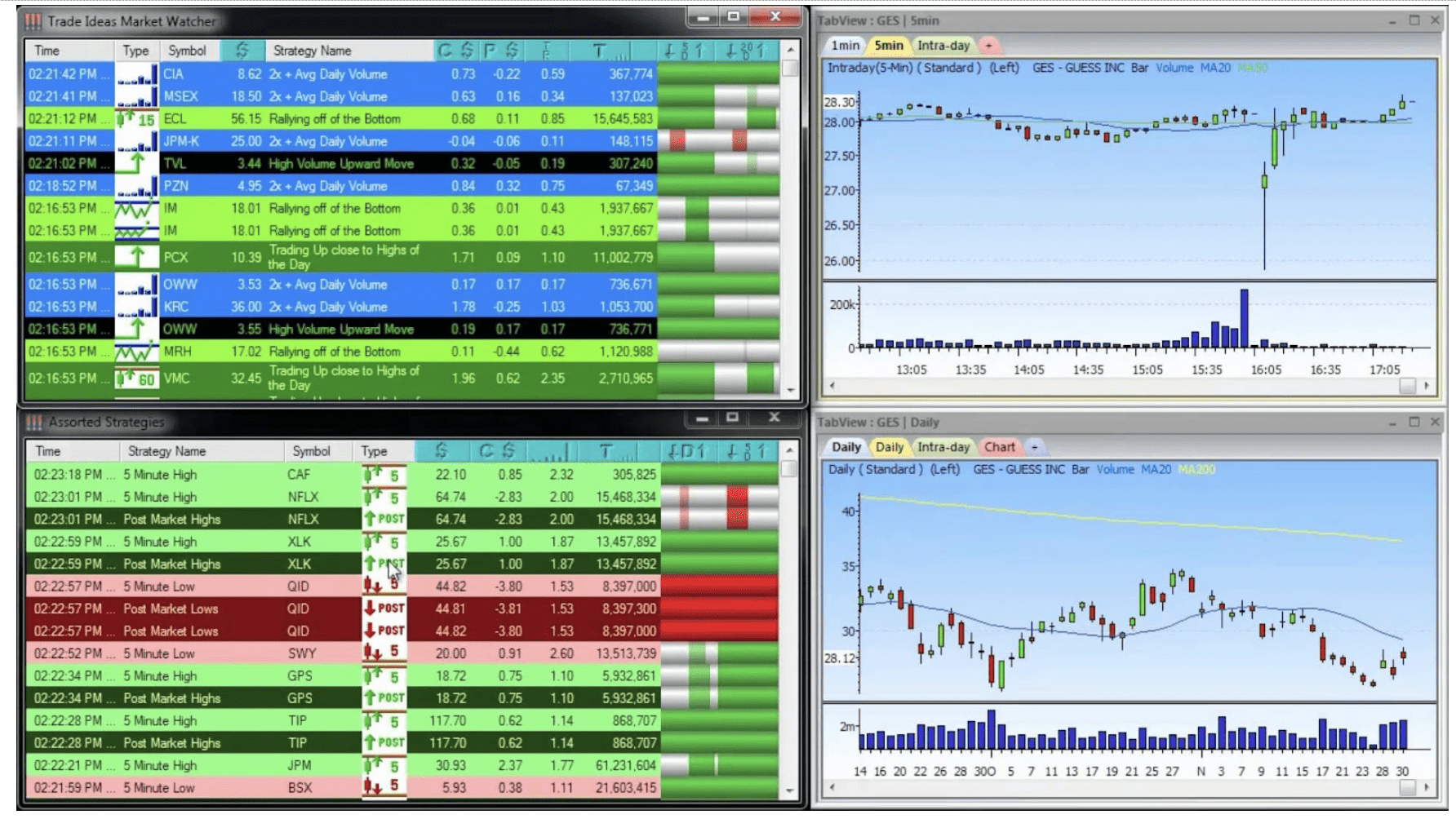
Imagine having to monitor more than 8000 stocks every second, a fire hose of data coming at you, leaving you overwhelmed trying to search for the data you need—this is where a scanner helps the most. Screeners can still monitor information, but more statically through input/output (scrolling, refreshing, etc.). The SEC notes that day traders must watch the market continuously during the day, which is exactly the kind of workload a scanner takes off your plate.
Scanners, however, do all the filtering for you once you set the parameters of what you are looking to find. After the scanner has the information needed, it will monitor thousands of stocks and ETFs (a firehose of data) to condense it into a more manageable set of data that satisfies your input configurations (narrow stream of data).
Stop Chasing Movers. Let the Scanner Find Them
Create a free account and watch live market scanning in action. Create Your Free Account
How Trade Ideas Makes Real-Time Market Scanning Easier
For traders looking to spot opportunities faster, understanding the difference between a market screener and a real-time scanner can make a significant difference.
Scanners are the future of automated trading, yet many people still do not take advantage of them, using screeners instead (the more tedious basic version of a scanner). Traders using screeners have to manually refresh and click constantly to find the data they are trying to find, requiring more time, patience, and energy than need be.
On the other hand, scanners allow for an active, quick, and automated approach. While Trade Ideas offers leading trade alert software features, live trading, and education programs, our company is best known for our real-time market scanner.
Most platforms now market themselves as AI-driven, but a genuine trading scanner still has to do one thing a screener cannot: evaluate live, streaming data the instant conditions change, not just when a user clicks refresh.
More than two decades, since launching our first market scanner in 2003, that scanning engine is powered by Holly, our suite of AI algorithms that run millions of overnight backtests across dozens of strategies to surface high-probability setups before the opening bell.
Our scanners use server-side technology, which entails a large data center to run the data and crunch numbers so that your computer doesn’t have to do the heavy lifting. Because our server farm monitors every transaction in the markets, the user has fewer steps to get through and is notified in real time, unlike screeners. Compared to the screeners other companies use, our scanner offers instantaneous results (a benefit they cannot match), which is why
Trade Ideas is consistently ranked among the top real-time scanning platforms for active traders.
Benefits of Stock Scanners and Stock Screeners
Both tools help traders find potential opportunities, but they support different needs. A scanner identifies market activity in real time, while a screener filters stocks based on specific criteria.
Benefits of Using a Stock Scanner
- Find opportunities faster: Identify stocks with price movements, volume changes, breakouts, or unusual activity as they happen.
- Monitor the market in real time: A real-time stock scanner continuously tracks market conditions, helping traders spot potential setups quickly.
- Save time on manual research: Instead of reviewing hundreds of stocks, traders can focus on opportunities that match their strategy.
- Support active trading: A day trading scanner can help short-term traders find stocks that are showing momentum during market hours.
Benefits of Using a Stock Screener
- Filter stocks based on your criteria: Find companies that match specific requirements like price, volume, financial metrics, or technical indicators.
- Build better watchlists: Organize potential stocks for further research and analysis.
- Simplify stock research: Quickly narrow down thousands of stocks to a more manageable list.
- Support different strategies: Useful for traders and investors following technical or fundamental approaches.
Stock Scanner vs Stock Screener: Which One Is Right for You?
The best tool depends on your trading goals and how you look for opportunities. A trader searching for market movements in real time will have different needs from someone who prefers researching and planning trades.
Choose a Stock Scanner If You Want To:
- Find opportunities as they happen: A scanner helps you track live market activity and identify stocks showing price movements, volume changes, or potential breakouts.
- Save time searching the market: A trading scanner automatically monitors stocks based on your chosen conditions, helping you focus on potential opportunities instead of manually reviewing charts.
- Support active trading strategies: If you are a day trader or momentum trader, a day trading scanner can help you spot setups faster during market hours.
- Use a tool built for fast decisions: Traders looking for the best stock scanner for day trading often prioritize real-time data, alerts, and customizable scanning options.
Choose a Stock Screener If You Want To:
- Research stocks before trading: A screener helps you filter companies based on factors like price, financial data, or technical indicators.
- Build a focused watchlist: It helps you organize stocks that match your preferred strategy.
- Take a planned approach: If you prefer analyzing opportunities before entering a trade, a screener provides a starting point for deeper research.
Can You Use Both?
Many traders use both tools together. A screener can help identify stocks that match a strategy, while a scanner can help track when those stocks become active in the market.
The right choice depends on your trading style. If you need to discover live market opportunities, a scanner may be the better fit. If you prefer researching and planning, a screener can support your decision-making process
Another great thing about scanners is that they are not limited to a single type of trader; anyone can use them (swing traders, day traders, etc.) Trade Ideas is one of the only companies that use a scanner platform for trading, and we have been doing so successfully for over two decades to get the data needed in real-time.
Our company represents the future of trading; without automated scanners, traders could not enjoy new trading innovations, such as our stock races. This flexibility is exactly why momentum and day traders have become the heaviest users of real-time scanning: a day trading scanner can surface a stock the moment it starts gapping, breaking volume averages, or crossing VWAP conditions that change minute to minute and that a once-a-day screener simply cannot track.
Our stock races could never be displayed or created on a screener—because screeners cannot deliver the constant update of automated information that a scanner can.
You can’t understand the magic of a real-time scanner without giving it a try for your selfstart a free trial and see how live signals compare to a static screener.
Which Tool Fits Active Traders, Day Traders, and Momentum Traders?
A screener still has a place in a trader’s toolkit it is useful for building a watchlist overnight or filtering by fundamentals before the market opens. But once the opening bell rings, conditions change by the second, and that is where a screener’s static, click-to-refresh design becomes a real handicap.
For active traders who need speed, a trading scanner remains the sharper tool, because it keeps working after the first filter is set, instead of waiting for the next manual search.
Momentum and day traders in particular tend to lean on a day trading scanner because their edge depends on catching a move within seconds of it starting a pre-market gap, a sudden volume spike, or a breakout through resistance. Those early moves are also the hardest to trade by hand, since the SEC points out that extended-hours trading typically brings thinner liquidity, wider bid-ask spreads, and bigger price swings than the regular session.
Swing traders and longer-term investors, by contrast, can often get by with a screener’s slower, more periodic filtering, since their setups develop over days rather than minutes.
Trade Ideas’ Holly AI engines are built specifically for the first group, combining overnight strategy backtesting with live intraday scanning so traders are not choosing between preparation and speed.
Catch the Move Before the Crowd Does
Pair overnight Holly AI backtesting with live intraday scanning in one platform.
Frequently Asked Questions
Is Trade Ideas a scanner or a screener?
Trade Ideas works as a real-time scanner, not a static screener — it continuously re-evaluates every stock instead of waiting for a manual refresh.
Can beginners use a scanner built for day trading?
Yes. A scanner built for day trading can feel overwhelming at first because of how much live data it surfaces, but most platforms, including Trade Ideas, offer pre-built scans and AI-curated signals so new traders do not have to build filters from scratch.
Is stock scanning software only useful for professionals?
No. While professional day traders rely on it most heavily, this kind of software has become accessible enough for part-time and beginner traders through free or lower-cost plans with delayed data.