
Why the First 30 Minutes of the Market Feel So Different
Why the First 30 Minutes of the Market Feel So Different
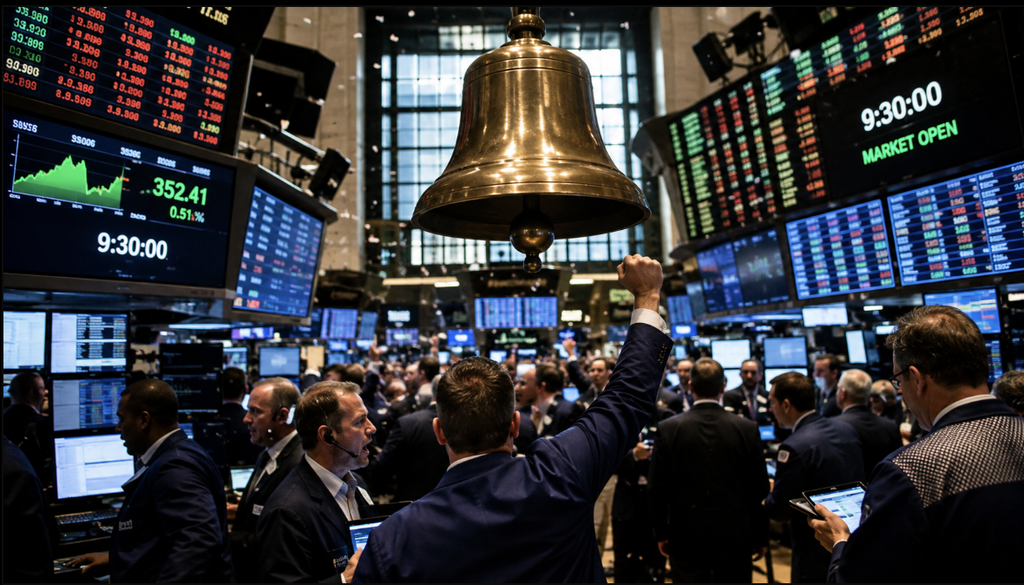
The bell rings at 9:30 AM, and suddenly everything feels different. Stocks that looked perfectly set up in pre-market are gapping in the wrong direction. Names you weren’t watching are spiking 8% on no news. Your chart from 9:15 looks nothing like what price is actually doing. The tape moves faster than you can process, and every decision feels urgent. If you’ve ever sat at your desk in the first 30 minutes of the trading day feeling overwhelmed, reactive, and completely out of sync with the market — you are not alone, and you are not doing it wrong.
The opening session is genuinely different from every other window of the trading day. Fundamentally, structurally, and mechanically different in ways that catch unprepared traders off guard every single morning. New traders feel overwhelmed, while experienced traders feel at home. The difference isn’t talent — it’s understanding exactly what is happening in those first 30 minutes and why. Because once you understand the mechanics behind the chaos, the opening session stops feeling like something that happens to you and starts feeling like the most powerful opportunity of the entire trading day. This is why the first 30 minutes feels so different — and how to use that knowledge to trade it better.
What’s Actually Happening at the Open
To understand why the first 30 minutes feels so different, you have to understand what is actually happening beneath the surface when that bell rings. Every order that built up overnight — from retail traders, institutions, algorithms, and market makers across every time zone — hits the market simultaneously at 9:30 AM. That is not a gradual process. It is an immediate, enormous collision of supply and demand that the market has to process all at once. The open is not a continuation of pre-market trading. It is the market conducting real-time price discovery — finding true price by absorbing an extraordinary amount of information and order flow in a compressed window.
Stocks that gapped up or down overnight are immediately tested as the market decides whether the move was justified or overdone — and gap fills and reversals in the first 30 minutes are some of the most reliable and most dangerous patterns in all of day trading. Algorithmic activity is at its absolute peak at the open — algos execute opening strategies, adjust overnight positions, and react to news simultaneously, creating the fast, seemingly erratic price action that confuses newer traders. And retail FOMO is running at its highest — emotional traders chasing gaps, reacting to headlines, and making decisions driven by fear and excitement rather than analysis. All of this happens at once.
Why It Feels Different From the Rest of the Day
Volume concentration is the most significant: more shares trade in the first 30 minutes than in any other equivalent window of the entire session. That volume creates faster, more violent price moves that can run stops, trigger alerts, and reverse completely within minutes. Bid-ask spreads are often wider at the open despite the high volume — market makers are managing elevated risk and passing that cost to traders through wider spreads, meaning every entry and exit in the first 30 minutes costs more than it would mid-session. The market’s emotional temperature is also uniquely elevated: traders who held positions overnight are either relieved or panicking, and that collective energy shows up directly in price action in ways that have nothing to do with the underlying fundamentals.
Technical indicators that work reliably during mid-session become significantly less reliable in the opening window—moving average crossovers, RSI levels, and support and resistance all behave differently when volume and volatility are this elevated. And any overnight news, earnings reports, or pre-market announcements are still being digested—the first 30 minutes is essentially the market arguing in real time about what the news actually means, with price as the scoreboard.
The Two Camps — How Traders Approach the Open
Camp 1: Avoid the First 30 Minutes Entirely
- Many experienced traders have a hard rule: no trades for the first 15-30 minutes after the open.
- The logic: let the chaos settle, let price discovery complete, and wait for a cleaner picture to emerge before committing capital
- The benefit: avoids the false breakouts, whipsaws, and emotional traps that define the opening window.
- The cost: misses some of the biggest moves of the day that happen in exactly this window
Camp 2: Specialize in the Open
- Some of the best and most consistent day trading strategies are built specifically around the opening 30 minutes.
- Opening range breakout strategies: identify the high and low of the first 15 minutes and trade the breakout in either direction
- Gap and go vs. gap and crap: reading whether a gap is going to hold and continue or reverse and fill — one of the most skill-intensive reads in all of day trading
- The first 5-minute candle: many traders use the first 5-minute candle as a key reference — a stock holding above it is bullish, failing below it is bearish
How to Read the First 30 Minutes Like an Experienced Trader
Reading the first 30 minutes like an experienced trader isn’t about better instincts — it’s about knowing what to look for and having preparation in place before the bell rings. Traders who navigate the open successfully almost always spend 30 to 60 minutes before the session building their watchlist, marking key levels, and defining exactly what needs to happen for them to take a trade.
By 9:30, they execute a plan—not make one. Volume is the primary tell: in the opening window, volume confirms or denies every move. A breakout on heavy volume is real. A breakout on thin volume is almost always a trap. If price is moving but volume isn’t confirming, wait. Waiting for the first pullback is another hallmark of experienced open traders — rather than chasing the initial move, they let price make its first aggressive push, wait for the pullback, and enter on the retest of a key level with a much cleaner risk-reward.
The Most Common Opening 30-Minute Mistakes
The opening 30 minutes punishes a specific set of mistakes more than any other window of the trading day — and knowing them in advance is half the protection. Chasing the gap is the most reliably expensive: buying a stock because it gapped up significantly without waiting to see whether the gap holds is how traders turn a missed opportunity into an actual loss. The gap looks like a signal. It often isn’t. Trading too many names simultaneously is equally destructive — the first 30 minutes demands focused attention, and trying to monitor five stocks at once in the opening window almost always means missing the move on all of them.
Pick your one or two highest conviction names and watch them closely. Ignoring pre-market levels is like walking into the open without a map — the high and low of pre-market trading are critical reference points that price almost always interacts with in the first 30 minutes, and traders who don’t have them marked are constantly surprised by moves that prepared traders anticipated.
Over-sizing at the open compounds every mistake: wider spreads and faster moves mean a given position size carries significantly more risk in the first 30 minutes than it does mid-session — size down to reflect the elevated volatility, not up because the opportunity feels bigger. And the most common and most expensive mistake of all: no plan. Walking into the opening bell without a defined watchlist, marked key levels, and clear setup criteria is the fastest way to ensure the first 30 minutes always feels like chaos.
The Bottom Line
The first 30 minutes of the trading day feel different because they are different — a unique convergence of overnight order flow, emotional energy, price discovery, and algorithmic activity that creates both the biggest opportunities and the biggest traps of the entire session. The traders who thrive in this window aren’t the ones with better instincts. They’re the ones who understand exactly what’s happening and show up with a systematic plan built before the bell rings. The ones who get consistently hurt are the ones still making that plan at 9:31. The open rewards preparation and punishes reaction every single morning without exception. Use Trade Ideas scanners pre-configured for opening range setups before the session starts—so when the first 30 minutes unfold, you see setups surface in real time rather than hunting for them while the market is already moving. Preparation is what makes the chaos readable. Without it, the open will always feel like it’s happening faster than you can respond.