
Self-Driving Cars Are Coming — And They’re Already Moving the Market
Self-Driving Cars Are Coming — And They’re Already Moving the Market
Distracted driving is at an all-time high. People are texting, watching videos, and multitasking behind the wheel at levels never seen before. The new generation learning to drive has grown up completely glued to screens — the idea of putting a phone down for a 30-minute commute feels genuinely foreign to them. But what if the car simply took over — not as a luxury feature for early adopters, but as a necessary response to a very real and very dangerous problem? Self-driving technology is no longer science fiction. It’s already on the roads. And the market is beginning to price in a transformation that will touch nearly every sector of the economy.
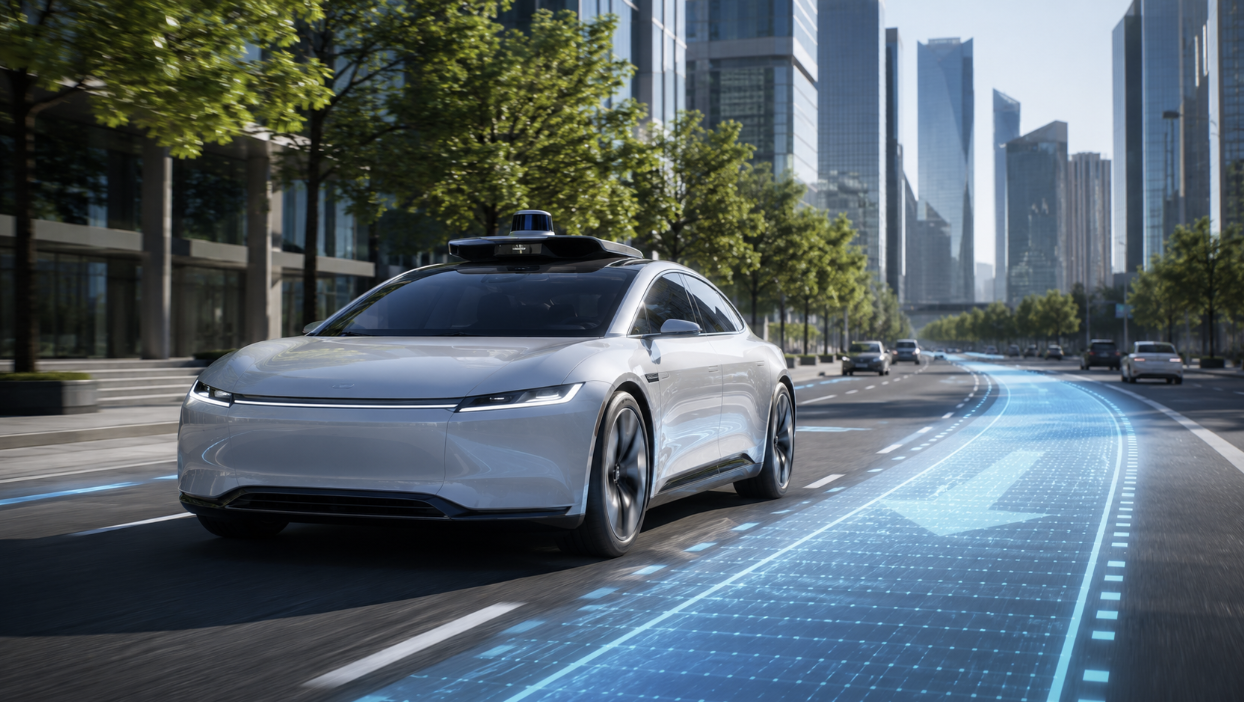
The Data Is Already In — And It’s Hard to Argue With
Self-driving cars are scary to many people — and that skepticism is understandable. Handing control of a two-ton vehicle to a computer feels counterintuitive. But the data is increasingly difficult to argue with. Autonomous vehicles are already demonstrating safety metrics significantly better than those of human drivers across multiple platforms and millions of real-world miles. Waymo has reported fewer injury-causing accidents per million miles compared to human-driven vehicles. Tesla’s Full Self-Driving data continues to show a widening gap between FSD-assisted miles and human-driven miles in accident rates. The core argument is simple: humans are distracted, emotional, tired, and increasingly reckless behind the wheel. Autonomous systems don’t text. They don’t get tired. They don’t watch the game on their phone while merging onto the freeway. Where the data goes, sentiment follows — and where sentiment follows, the market moves.
What Changes When Self-Driving Goes Mainstream
The ripple effects of widespread adoption of autonomous vehicles are enormous and touch almost every corner of daily life. The insurance industry faces a structural overhaul because fewer accidents mean dramatically lower claim rates. The entire auto insurance pricing model is being rebuilt from the ground up around vehicle data rather than driver history. Road efficiency improves as autonomous vehicles communicate with one another, optimize routes, and eliminate human error, which is responsible for the majority of traffic slowdowns and accidents. The average American spends over 300 hours per year commuting — autonomous vehicles turn that dead time into productive time, changing how people work, consume content, and spend money on the road. And for families, safer roads mean fewer fatalities, fewer injuries, and fewer emergency room visits — downstream effects that ripple through healthcare costs and quality of life in ways the market is only beginning to price in.
How This Affects the Stock Market — The Sectors to Watch
The autonomous vehicle revolution doesn’t just move car stocks — it moves an entire ecosystem of technology companies that most traders haven’t fully connected to the story yet. Here’s where to start:
- LiDAR companies: The eyes of the car — providing laser-based environmental mapping
- RADAR technology: For all-weather, long-range detection and camera systems that form the visual perception layer, it represents a foundational infrastructure play for autonomous adoption.
- Qualcomm and NVIDIA: The brains of the car—semiconductor companies like them are positioned as dominant suppliers of the computing power that autonomous vehicles require, which is significantly greater per vehicle than that of anything on the road today.
- Garmin: Mapping and navigation provider that is building the precision HD road data that self-driving systems depend on to operate safely at scale.
- And in ride-sharing, Tesla’s robotaxi ambitions and Waymo’s expanding commercial operations are beginning to reshape the entire economics of transportation in ways that create both opportunity and disruption for existing players like Uber and Lyft.
Tesla — The Stock at the Center of It All
No conversation about autonomous vehicles and the stock market is complete without addressing Tesla directly. Tesla is no longer just a car company — it is an AI and robotics company that happens to make cars, and the market is increasingly pricing it that way. Tesla has accumulated more real-world autonomous driving miles than any other company on the planet, and that data advantage compounds over time in ways that are difficult for competitors to replicate quickly. The robotaxi opportunity alone represents a potential revenue stream that could dwarf current vehicle sales. And with Optimus — Tesla’s humanoid robot program running on the same underlying AI as FSD — the autonomous-vehicle story is expanding beyond transportation. The risks are real: regulatory timelines, technology hurdles, and growing competition from Waymo and Chinese EV manufacturers. But the bull case, if full autonomy arrives at scale, reframes Tesla’s valuation entirely.
How to Trade It Right Now
This isn’t a theme you need to wait for — it’s already moving stocks today. Use Trade Ideas’ AI agent to build a scanner around autonomous vehicle ecosystem names and set alerts around key catalyst dates: regulatory milestones, Tesla FSD updates, Waymo expansion announcements, and NHTSA safety data releases are all market-moving events. Short-term, trade the momentum around specific catalysts. Long-term, focus on the infrastructure layer — chipmakers, sensor manufacturers, and mapping providers that benefit regardless of which autonomous platform ultimately wins. The ecosystem is larger than most traders realize, and the AI agent can surface the full picture in seconds.
The self-driving revolution is not a question of if — it’s a question of when and how fast. The data already show that autonomous vehicles are safer than human drivers. The traders who understand this theme now, before it becomes a mainstream headline, are the ones who will be positioned for the biggest moves. The roads are getting smarter; your portfolio should too. Log into Trade Ideas today, build your autonomous vehicle scanner, and start tracking the stocks at the center of one of the biggest technological transformations of our lifetime — before the rest of the market catches up.