
Q2 2026: The Great Reset – Why April Could Mark the End of Market Chaos
Q2 2026: The Great Reset – Why April Could Mark the End of Market Chaos

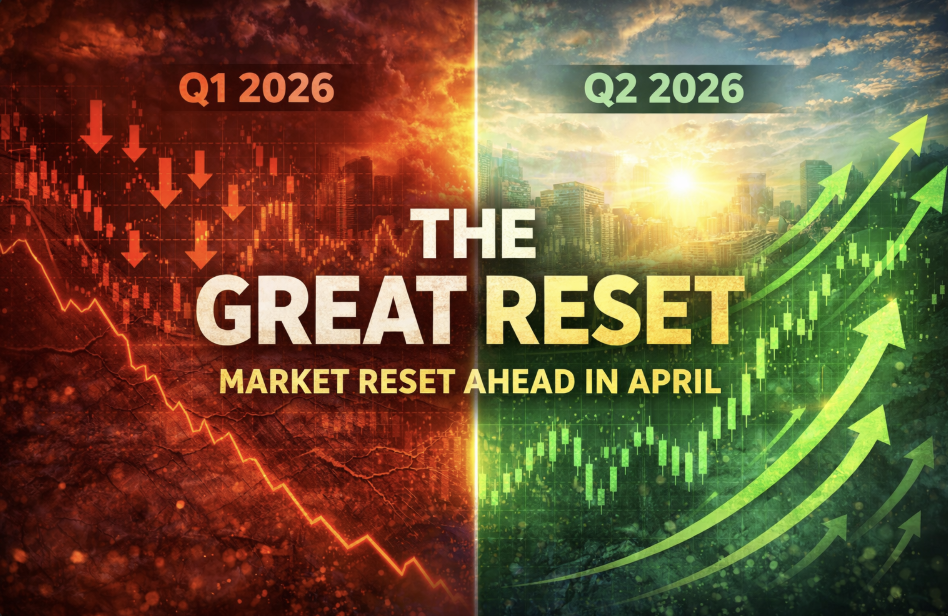
Q1 2026 is a quarter investors want to forget: AI displacement fears, mega-cap concentration masking losses, and volatility left portfolios bleeding. April 1st brings more than a calendar shift; it signals a market reset. Here, historical trends, seasonal tailwinds, and clear corporate earnings converge to provide real opportunity. Q2 typically outperforms after a weak first quarter. New inflows, less tax selling, and clearer management guidance lift markets out of the winter doldrums. Multiple factors shape this opening, including AI checks that separate hype from results. Institutions are moving away from mega-caps and oversold quality companies with strong valuations. Patient investors can seize these trends. This is not wishful thinking, but realistic optimism rooted in measurable catalysts for disciplined investors.
Q1 2026 Recap: The Perfect Storm of Market Pain
Q1 2026 brought significant market challenges through several converging factors:
AI displacement fears systematically crushed individual stocks as investors realized automation threatened millions of jobs.
Mega-cap concentration masked widespread carnage by allowing seven technology giants to prop up index levels while hundreds of quality companies suffered devastating declines.
Interest rate uncertainty and geopolitical tensions created persistent risk-off sentiment.
Alarming insider selling patterns signaled corporate executives knew worse news was coming.
- The brutal numbers behind this pain included:
- Dramatic Russell 2000 underperformance versuOver 60% of individual stocks are falling 30% or more despite headline index gains. ine index gains
- Volatility measures spiking to crisis levels
- Investor sentiment indicators are reaching pessimistic extremes not seen since major market corrections.
What made Q1 2026 especially painful, versus other weak first quarters, was extreme market concentration. This caused index performance to sharply diverge from the reality of individual stocks. Meanwhile, the AI revolution quickly created winners and losers, outpacing efficient market pricing. Most investors felt like failures, despite following sound strategies. Traditional diversification seemed broken, and risk management failed against sector-wide decline.
Historical Patterns: Why Spring Awakens Markets
The “Sell in May” phenomenon ironically begins with robust April strength that catches pessimistic investors off guard. Spring optimism is not just psychological folklore; it comes from renewed investor confidence as winter weather clears and economic data improves. Portfolio managers also deploy fresh capital. Corporate calendar benefits provide fundamental support for Q2 strength, as the Q1 earnings season delivers much-needed clarity after the winter’s uncertainty. This allows management teams to provide better guidance based on actual results instead of projections. Companies often announce capital allocation decisions, dividend increases, and share buyback programs that reward patient shareholders. The combination of seasonal money flows, reduced volatility from weather-based disruptions, and corporate actions creates favorable conditions for Q2.
The AI Reality Check and Fresh Money Flows: From Fear to Opportunity
Q1 earnings provide the crucial AI reality check, separating hype from business results. Companies now offer realistic timelines for AI implementation. They show measurable cost-cutting benefits and moderate their growth promises to realistic levels. This sector differentiation creates clear winners and losers, causing large valuation gaps. The result is genuine stock-picking opportunities. Many high-quality companies trade at steep discounts due to broad AI-related fear, not company-specific problems. At the same time, institutional money flows are accelerating as hedge funds finish quarterly rebalancing. This creates systematic buying opportunities. International flows also increase as U.S. concentration concerns ease, while smart money rotates from overvalued mega-caps toward overlooked value plays that survived Q1’s selling.
Retail investor behavior is shifting positively as FOMO fades and more strategic thinking prevails. Social media sentiment is clearly moving from panic and fear to cautious optimism, strengthening the potential for a sustained market recovery. The convergence of sharper AI-driven reality checks and fresh capital infusions is building a robust foundation for Q2’s promising reset. In this encouraging season, fundamental analysis holds renewed importance, and patient investors are well positioned to benefit from oversold conditions and valuation opportunities that emerged during Q1’s emotional selling.
Sectors Positioned for Q2 Recovery
Q1’s broad selling created value opportunities in several sectors. Here is where smart money looks:
- Financial Services, Industrials & Healthcare — Quality names are trading at substantial discounts despite strong fundamentals, punished by broad market pessimism rather than any deterioration in their underlying businesses
- International Markets — European and Asian equities offer genuine growth at reasonable valuations relative to stretched U.S. mega-cap multiples, making global diversification one of the most attractive plays heading into Q2.
- Quality Growth Companies — These are businesses with sustainable competitive advantages, manageable debt, and consistent earnings growth. They are available at prices not seen since the 2022 bear market. Patient investors can benefit by looking past the AI noise.
- Dividend & Value Stocks — Utilities, consumer staples, and REITs offer a rare mix of income and capital appreciation. Institutional money is rotating away from speculative growth and toward companies with predictable cash flows and shareholder-friendly return programs.
The bottom line: Q1’s AI-driven fear created the oversold conditions that Q2 seasonal tailwinds and institutional repositioning typically reward. The opportunity is in the quality of the names the panic left behind.
Your Q2 Action Plan
Q2 2026 offers a genuine reset opportunity after Q1’s chaos. Success requires a systematic approach, not hope-based investing. Use Trade Ideas to identify quality companies down 30% or more from recent highs. Focus on fundamentally sound businesses trading at discounts due to broad market pessimism, not company-specific problems. Configure relative-strength analysis screens to spot emerging sector leadership as money rotates away from mega-cap dominance. Monitor technical setups from Q1’s consolidation bases that could break out as fresh institutional money deploys.
The key is to focus on quality at attractive valuations, not to chase headline-driven momentum plays or try to time the exact bottom of volatile markets. Set up alerts for oversold value opportunities in financials, healthcare, and industrials. Screen for international diversification plays trading below historical multiples. Identify dividend-paying, quality-growth companies that combine income with potential for capital appreciation. Position for recovery with realistic expectations; this won’t be a straight-line move higher. Patient investors who survived Q1’s emotional roller coaster can benefit from the convergence of seasonal tailwinds, institutional repositioning, and AI reality checks. These create the foundation for sustained Q2 strength. Start building your recovery watchlist now, because the best opportunities often emerge when pessimism is highest, and headlines are most frightening.