
Portfolio Spring Cleaning: 3 Questions Every Stock Must Answer
Portfolio Spring Cleaning: 3 Questions Every Stock Must Answer

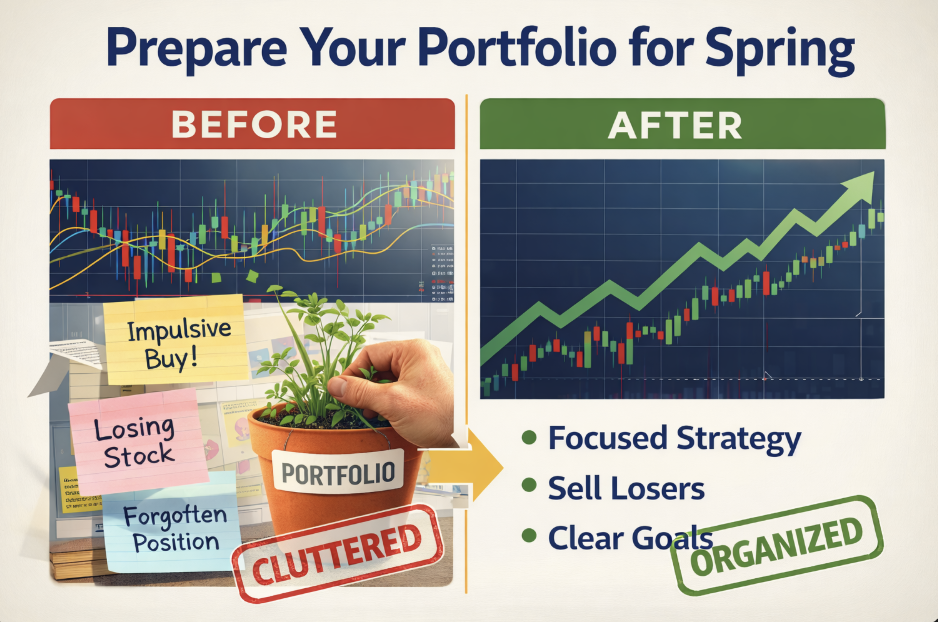
Spring represents the perfect time for portfolio evaluation and cleanup, when fresh quarterly earnings data meets the natural human instinct to organize and refresh after winter’s end. Most portfolios gradually become cluttered with underperforming stocks, impulse purchases, and forgotten positions that drag down returns like weeds ruin a garden. The solution isn’t complex spreadsheets or sophisticated analysis – it’s three simple, powerful questions that cut through emotional attachment and analytical noise to reveal which stocks deserve your capital and which are dead weight holding back your financial progress. This systematic framework transforms the overwhelming task of portfolio evaluation into clear, actionable keep-or-sell decisions that any investor can implement immediately, turning spring cleaning from a dreaded chore into a wealth-building opportunity that positions your portfolio for stronger performance in the months ahead.
The Problem: Portfolio Clutter and Why Spring Cleaning Matters
Most portfolios gradually accumulate clutter through impulse buys during market rallies, forgotten positions, and emotional attachments to losing stocks that prevent rational sell decisions. All of which creates unfocused diversification that drags down overall performance while trapping capital in stagnant positions and analysis paralysis. Spring presents an ideal time for portfolio cleanup, with fresh Q4 earnings data enabling objective evaluation, the April tax deadline motivating optimization decisions, and natural seasonal preparation for sector rotations heading into Q2. The systematic advantage of framework-based evaluation eliminates emotion-driven decisions that plague most investors, providing consistent criteria across all positions for objective performance measurement and disciplined portfolio management. Rather than hoping underperformers will recover or continuing to hold positions out of habit, a structured approach transforms portfolio management from reactive emotional decisions into a proactive wealth-building strategy that positions your investments for stronger future performance.
Question 1: “What Would I Do If I Inherited This Stock Today?”
This powerful question removes the emotional baggage and sunk-cost bias that cloud judgment on existing holdings by forcing you to evaluate each position with completely fresh eyes. Ask yourself honestly: if someone left you this exact stock in their will today, would you research the company and choose to buy it with current information, or would you immediately sell and invest the proceeds elsewhere? Does this stock deserve a place in your ideal portfolio right now based on its current fundamentals, growth prospects, and competitive position, regardless of what you originally paid or how long you’ve held it? The implementation requires brutal honesty without letting purchase history influence your assessment – focus purely on current merit versus historical attachment, whether this represents the best use of this specific amount of capital today, and trust your gut reaction for a clear keep-or-sell signal. If you wouldn’t enthusiastically buy the stock today, you shouldn’t continue holding it tomorrow.
Question 2: “Can I Explain This Investment in Two Sentences?”
In other words, “Does the chart confirm the story?” This clarity test demands that you articulate both why you own the stock and why it will outperform the market in just two clear, compelling sentences. If you can’t do this exercise immediately and confidently, you shouldn’t own the position because unclear reasoning leads to poor decision-making during volatile periods. A genuine investment thesis explains the company’s competitive advantage, growth catalyst, or value proposition that will drive future returns, while hope-based speculation relies on vague assumptions or wishful thinking without fundamental support. Red-flag responses that signal immediate selling include: “I’m hoping it comes back,” “Someone recommended it,” and “It’s down so much I have to hold.” If your explanation sounds more like justification than conviction, without specific timeframes or catalysts, you’re holding a position based on emotion rather than analysis.
Question 3: “How Has This Performed vs. the S&P 500?”
The performance reality check strips away all excuses and rationalizations by comparing your stock’s total return against the S&P 500 over your entire holding period, because if you can’t beat a simple index fund, you’re destroying wealth through active stock picking rather than creating it. This evaluation must include risk-adjusted returns since a stock that matches the S&P 500’s performance while exhibiting twice the volatility represents inferior risk-adjusted returns that don’t justify the additional stress and uncertainty. Look for consistent underperformance patterns rather than short-term fluctuations – a stock that has lagged the market for multiple quarters without a clear catalyst for improvement signals fundamental problems with either the company or your original investment thesis. The benchmark-beating standard should be your minimum expectation.
Action triggers for selling include persistent underperformance without credible turnaround catalysts, recognition that better opportunities exist elsewhere for the same capital, and honest acknowledgment that the opportunity cost of holding this position exceeds any potential recovery scenario. Remember: keeping an underperforming stock means you’re choosing it over every other investment option, making benchmark comparisons the ultimate accountability measure.
Your Action Plan: Implementing the 3-Question Framework
Stocks that pass all three questions are definite keepers that deserve continued investment; those that fail become strong sell candidates requiring immediate attention, while mixed results indicate positions that need deeper analysis or a “wait and see” approach. Start your implementation strategy with clear losers first, since these decisions are easiest and yield immediate portfolio improvement; coordinate any selling with tax-loss harvesting opportunities to offset gains; and document your decisions with rationale to enable future learning from both successes and mistakes. Apply this three-question framework quarterly rather than annually to prevent portfolio clutter from accumulating and maintain disciplined investment standards throughout changing market conditions. This simple framework beats the complex analysis paralysis that prevents action, providing objective evaluation criteria that eliminate emotional decision-making and create accountability for every position in your portfolio. Take action this weekend by applying these three questions to your bottom 10% performers first, freeing up capital for better opportunities. Join Trade Ideas today to continue simplifying your portfolio management and improving your long-term returns through focused, systematic decision-making.