
Reading the Mountain, Reading the Market: How Snow Conditions Mirror Market Sentiment
Reading the Mountain, Reading the Market: How Snow Conditions Mirror Market Sentiment
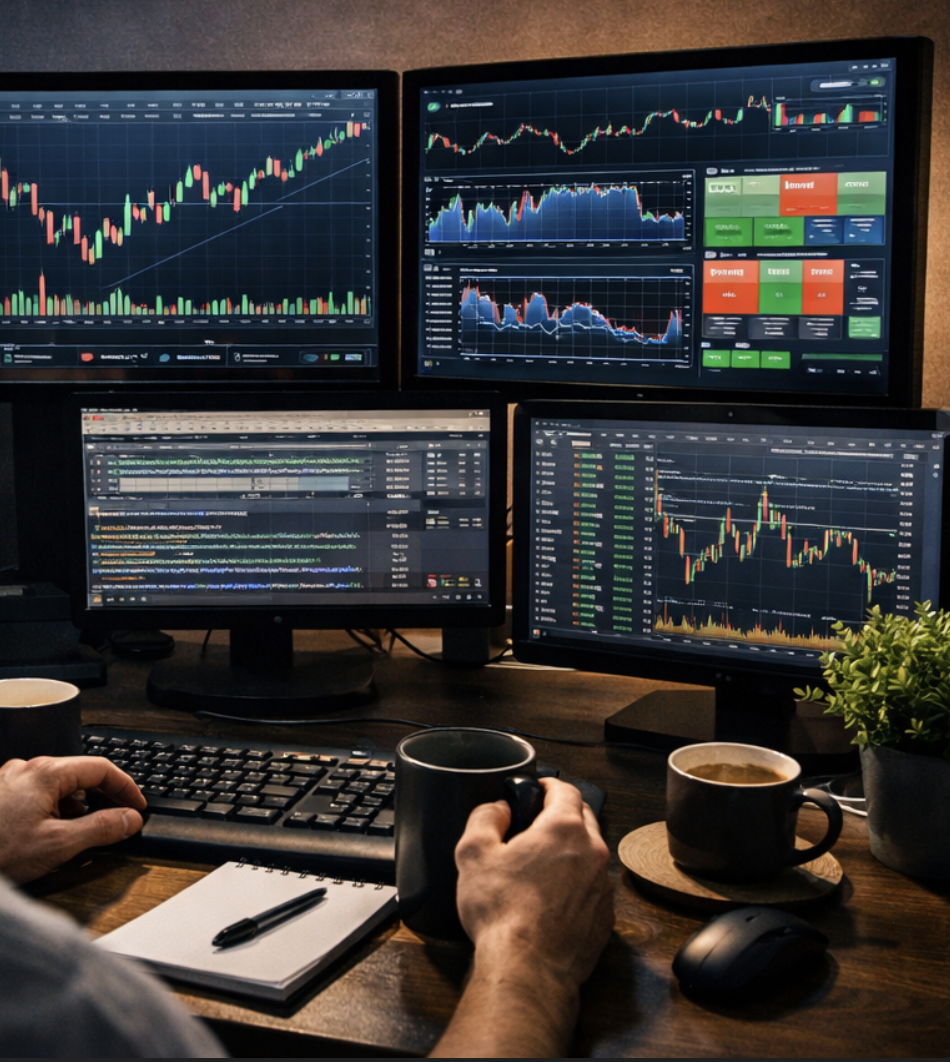
Standing at the summit, a seasoned skier pauses before the first turn, eyes scanning the slope below. Is that fresh powder or wind-blown crust? Are those tracks from this morning or yesterday? Where’s the sun hitting hardest, and which runs are still in shade? This moment of assessment—reading the mountain before committing—mirrors the exact ritual every successful trader performs each morning. Opening their trading platform, they scan overnight market action, check futures, assess volume patterns, and gauge sentiment before risking a single dollar. Both the mountain and the market demand the same fundamental skill: the ability to read environmental conditions, adapt strategy in real-time, and respect forces beyond your control. The skier who ignores changing snow conditions ends up injured; the trader who ignores shifting market sentiment ends up broke. What follows is an exploration of how the art of reading snow conditions translates directly to reading market sentiment—and why mastering this skill separates amateurs from professionals in both arenas.
The Morning Assessment: Pre-Run vs. Pre-Market
Before the first chairlift even starts turning, experienced skiers are already working—checking overnight weather reports, assessing temperature and wind patterns, reviewing avalanche bulletins, and studying mountain condition updates. They choose their runs based on what the mountain is telling them right now, not what was epic yesterday. Traders follow an almost identical ritual: reviewing overnight news and international market action, checking pre-market futures and volume indicators, scanning for earnings reports and economic data releases, then adjusting watchlists based on current setups rather than yesterday’s winners. The parallel runs deeper than the checklist—both require the emotional discipline to separate what you want conditions to be from what they actually are. A skier hoping for powder when the mountain delivers ice will have a brutal day; a trader hoping for continuation when the market signals reversal will have a brutal account. Experienced practitioners in both fields develop morning routines that prevent costly mistakes, understanding a fundamental truth: the best preparation happens before you commit. Once you’re halfway down the slope or already in the trade, your options narrow dramatically.
Fresh Powder vs. Packed Powder: High Volatility vs. Low Volatility Markets
Every skier knows the thrill of a fresh powder day—deep snow offering freedom and flow, opportunities for big, beautiful turns, but also the very real risk of getting stuck in over your head, literally. The excitement of powder can lead to overconfidence and dangerous decisions, requiring adjustments to speed, turn shape, and risk tolerance that many skiers fail to make until it’s too late. High volatility markets mirror this exactly: they offer bigger profit opportunities but demand respect, making it easy to get “stuck” in a position that moves too fast to manage. The excitement during earnings season or major market catalysts can cloud judgment, just as fresh snow clouds decision-making, which is why volatile conditions require tighter stops, smaller positions, and quicker decisions.
Conversely, packed powder days offer predictable, controlled conditions—fewer surprises and smaller thrills, but it’s much easier to execute your planned strategy. Low volatility markets present the same character: range-bound, choppy price action with smaller moves, fewer home-run opportunities, but also less catastrophic risk, creating a better environment for mechanical strategies and patience. The key is recognizing which conditions you’re facing and adjusting your approach accordingly, not forcing a powder strategy onto packed snow or vice versa.
Reading Terrain Features: Technical Indicators Are Your Trail Markers
Mountains provide constant feedback through trail markers indicating difficulty level, terrain features like trees and moguls signaling what’s ahead, other skiers’ tracks revealing safe paths and dangerous areas, and flags warning of closures or hazards—if you know how to read them. Markets offer the same navigational system: support and resistance levels acting as terrain markers, volume patterns showing where other traders are active, price action revealing the “tracks” of institutional money, and news and earnings calendars flagging upcoming hazards. The skill development curve mirrors perfectly in both domains. Beginners follow obvious markers rigidly—green circles only, buy at support only—unable to synthesize additional information. Intermediate practitioners start reading subtle cues: that slight change in snow texture signaling ice ahead, that volume divergence suggesting a reversal brewing. Experts reach a level where they synthesize multiple signals into instant, almost unconscious decisions, reading the mountain or the chart the way you read this sentence—effortlessly processing complex information without deliberate thought. Both skills require thousands of hours to develop true pattern recognition, and neither can be rushed or faked when conditions turn challenging.
Changing Conditions: Adaptation Over Ego
The mountain teaches a humbling lesson that saves lives: what was perfect powder at 9 AM becomes dangerous, heavy slush by 2 PM as sun exposure, temperature, and traffic transform everything. Stubbornly sticking to your planned route despite changing conditions doesn’t demonstrate commitment—it leads to injury. The best skiers flow with conditions rather than fight them, recognizing the mountain doesn’t care about their plans. Markets teach the same lesson with equal brutality: opening-range strategies that worked beautifully for two hours collapse as the session evolves, economic data or Fed speakers shift sentiment instantly, and holding onto a thesis when the market screams otherwise destroys accounts with merciless efficiency. Flexibility and humility consistently outperform rigidity and ego in both arenas. The deeper lesson cuts to the core of both pursuits—you’re operating in dynamic systems utterly beyond individual control. Success comes not from controlling the mountain or the market, but from reading conditions accurately, adapting your approach continuously, and responding appropriately to what actually is rather than what you wish would be. Fight either environment, and you’ll lose; flow with it, and you might just survive to ride another day.
When Conditions Turn Dangerous: Knowing When to Stay Off the Mountain
The hardest wisdom to accept in both skiing and trading is knowing when not to participate. High avalanche danger means staying in the lodge, whiteout conditions aren’t worth the risk, equipment failure means ending the day early, and physical exhaustion is a recipe for injury—yet ego constantly whispers that real skiers push through. Trading demands identical discipline: extreme volatility beyond your risk tolerance means sitting in cash; unfamiliar market conditions require observation, not participation; technical issues or emotional exhaustion mean closing the platform; and overtrading or revenge trading demand an immediate break. The hardest lesson remains the same across both domains—the mountain will be there tomorrow, the market will be there tomorrow, and ego-driven decisions to “prove yourself” lead to catastrophic outcomes. The best performers in both fields share a defining characteristic: they know when NOT to participate, understanding that preservation always precedes performance.
Respect, Read, Respond
Both the mountain and the market demand respect, not conquest. Reading conditions is a skill that compounds over time, and the best practitioners in both fields share unmistakable common traits: rigorous preparation and routine, constant environmental awareness, emotional discipline paired with humility, and the willingness to adapt their approach or walk away entirely when conditions demand it. Whether you’re standing at the top of a double black diamond or hovering over the “enter” button on a high-risk trade, the question remains identical: “What are conditions telling me right now, and am I prepared to respond accordingly?” This week, approach your trading platform like you’d approach an unfamiliar mountain—assess before you commit, read the conditions with clear eyes, and remember that survival comes before glory. The markets, like the mountains, reward those who respect their power and punish those who don’t. Your job isn’t to conquer either one; it’s to read them accurately and respond wisely.